

As a supplier of teflon hoses, I've witnessed firsthand the growing demand for these versatile components across various industries. Teflon, also known as polytetrafluoroethylene (PTFE), is renowned for its exceptional chemical resistance, high-temperature stability, and low friction properties. However, one crucial aspect that often comes under scrutiny is the permeability of teflon hoses to different substances. In this blog post, we'll delve into the science behind teflon hose permeability, explore its implications for different applications, and provide insights to help you make informed decisions when selecting the right teflon hose for your needs.
Understanding Permeability
Permeability refers to the ability of a material to allow the passage of a substance through it. In the context of teflon hoses, permeability is a measure of how easily gases, liquids, or vapors can penetrate the hose wall. This property is influenced by several factors, including the chemical nature of the substance, the temperature and pressure conditions, and the thickness and structure of the teflon material.
Teflon is known for its excellent chemical resistance, which means it is highly resistant to the corrosive effects of many chemicals. However, this does not mean that it is completely impermeable. Some substances, particularly small molecules such as gases and volatile organic compounds (VOCs), can diffuse through the teflon material over time. The rate of diffusion depends on the concentration gradient of the substance across the hose wall, the solubility of the substance in the teflon material, and the diffusion coefficient of the substance in the teflon matrix.
Permeability to Gases
Gases are the most common substances that can permeate through teflon hoses. The permeability of teflon to gases is generally low compared to other polymers, but it can still vary depending on the type of gas and the operating conditions. For example, helium, which has a very small molecular size, has a relatively high permeability through teflon compared to larger molecules such as nitrogen or oxygen.
The permeability of teflon to gases is also affected by temperature and pressure. As the temperature increases, the kinetic energy of the gas molecules increases, which leads to an increase in the diffusion rate. Similarly, as the pressure increases, the concentration gradient across the hose wall increases, which also enhances the diffusion rate. Therefore, it is important to consider the operating temperature and pressure when selecting a teflon hose for gas applications.
Permeability to Liquids
The permeability of teflon to liquids is generally lower than that to gases, but it can still be a concern in some applications. The permeability of teflon to liquids depends on the chemical nature of the liquid, its solubility in the teflon material, and the operating conditions. For example, polar liquids such as water and alcohols have a relatively low solubility in teflon, which means they have a low permeability through the hose wall. On the other hand, non-polar liquids such as hydrocarbons and solvents have a higher solubility in teflon, which means they can permeate through the hose wall more easily.
In addition to the chemical nature of the liquid, the viscosity and surface tension of the liquid can also affect its permeability through teflon hoses. High-viscosity liquids have a lower diffusion rate compared to low-viscosity liquids, while liquids with high surface tension tend to form a barrier on the surface of the teflon material, which can reduce the permeability.
Permeability to Vapors
Vapors are a special case of gases that are in equilibrium with their liquid phase. The permeability of teflon to vapors is similar to that to gases, but it can be affected by the presence of the liquid phase. For example, if a teflon hose is in contact with a liquid that has a high vapor pressure, the vapor can diffuse through the hose wall and accumulate on the other side. This can lead to the formation of a concentration gradient, which can enhance the diffusion rate.

The permeability of teflon to vapors is also affected by the temperature and pressure conditions. As the temperature increases, the vapor pressure of the liquid increases, which leads to an increase in the concentration of the vapor in the gas phase. Similarly, as the pressure decreases, the partial pressure of the vapor in the gas phase decreases, which can also enhance the diffusion rate.
Implications for Different Applications
The permeability of teflon hoses to different substances has important implications for various applications. In some applications, such as chemical processing and pharmaceutical manufacturing, it is crucial to prevent the leakage of chemicals or contaminants through the hose wall. In these cases, it is important to select a teflon hose with a low permeability to the specific substances involved.
In other applications, such as gas sampling and analytical instrumentation, the permeability of the teflon hose to gases can be an advantage. For example, in gas chromatography, a teflon hose can be used to transfer the sample gas from the sample injection port to the column. The low permeability of the teflon hose to the sample gas ensures that the composition of the sample is not affected by the diffusion of the gas through the hose wall.
Selecting the Right Teflon Hose
When selecting a teflon hose for a specific application, it is important to consider the permeability of the hose to the substances involved. Here are some factors to consider:
- Chemical Compatibility: Ensure that the teflon hose is compatible with the chemicals or substances that it will be in contact with. This includes considering the chemical nature of the substance, its concentration, and the operating temperature and pressure.
- Permeability Rating: Look for a teflon hose with a low permeability rating for the specific substances involved. Some manufacturers provide permeability data for their teflon hoses, which can be used to compare different products.
- Hose Construction: The construction of the teflon hose can also affect its permeability. For example, a hose with a thicker wall or a reinforced structure may have a lower permeability compared to a hose with a thinner wall or a non-reinforced structure.
- Operating Conditions: Consider the operating temperature and pressure conditions when selecting a teflon hose. Higher temperatures and pressures can increase the permeability of the hose to gases and liquids, so it is important to choose a hose that can withstand the expected operating conditions.
Our Teflon Hose Products
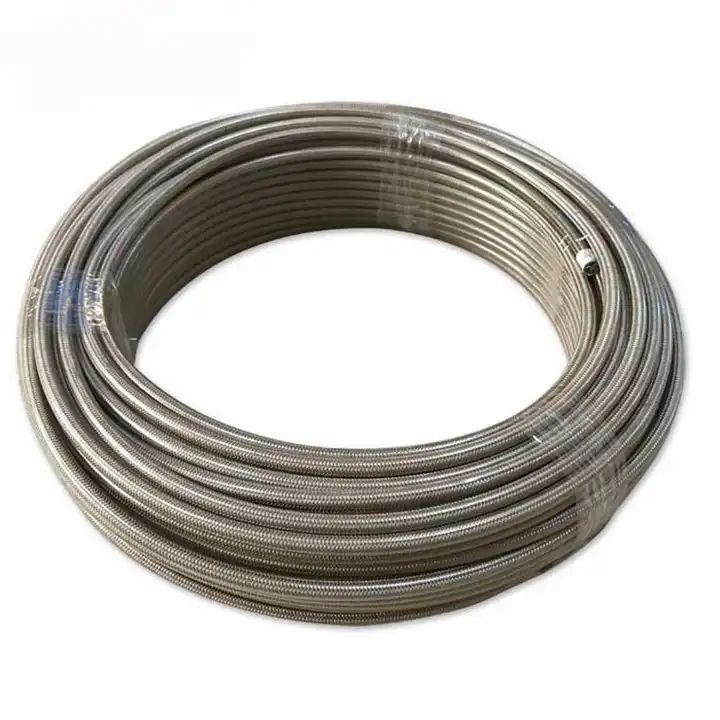
At our company, we offer a wide range of teflon hoses to meet the diverse needs of our customers. Our PTFE Hose is made from high-quality PTFE material, which provides excellent chemical resistance and low permeability to a wide range of substances. Our PTFE Braided Hose is reinforced with a stainless steel braid, which provides additional strength and durability. Our SAE 100 R14 Teflonning Hose is designed for high-pressure applications, and it meets the requirements of the SAE 100 R14 standard.
If you have any questions or need assistance in selecting the right teflon hose for your application, please don't hesitate to contact us. Our team of experts is available to provide you with technical support and guidance. We look forward to working with you to find the best teflon hose solution for your needs.
Conclusion
The permeability of teflon hoses to different substances is an important factor to consider when selecting a hose for a specific application. By understanding the science behind teflon hose permeability and considering the factors discussed in this blog post, you can make an informed decision and choose the right teflon hose for your needs. If you have any questions or need further information, please contact us. We are here to help you find the best teflon hose solution for your application.
References
- ASTM D1434 - Standard Test Method for Determining Gas Permeability Characteristics of Plastic Film and Sheeting
- ISO 15105 - Determination of Gas Transmission Rate
- "Handbook of Teflon and Fluoroplastics" by Robert A. Gross