

Hey there! As a supplier of teflon hoses, I've seen my fair share of issues related to static electricity in these hoses. Static electricity can be a real pain in the neck, causing all sorts of problems like sparks, shocks, and even fires in some extreme cases. In this blog, I'm gonna share some tips on how to prevent static electricity in a teflon hose.
First off, let's understand why static electricity builds up in teflon hoses. Teflon, also known as PTFE (Polytetrafluoroethylene), is an excellent insulator. While this is great for many applications, it also means that it can easily accumulate static charges. When a fluid flows through the teflon hose, friction occurs between the fluid and the inner wall of the hose. This friction can cause electrons to be transferred, leading to a buildup of static electricity.
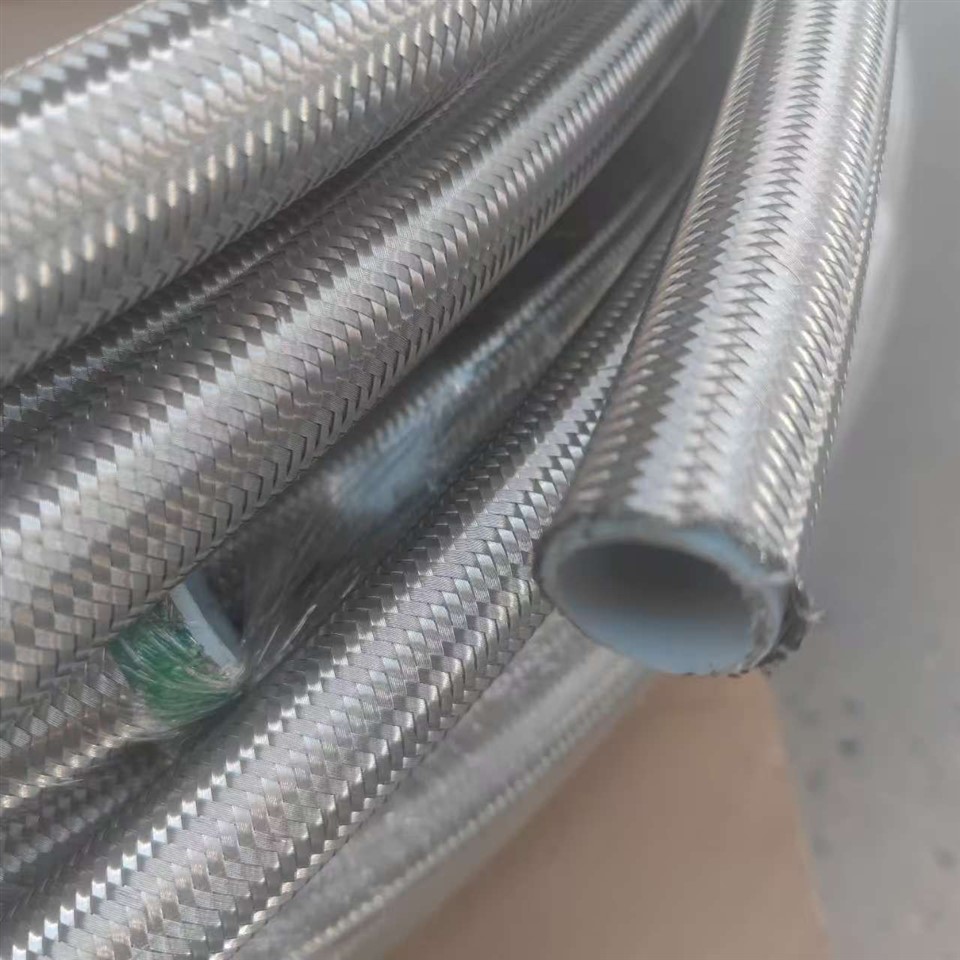
One of the simplest ways to prevent static electricity is to use a conductive teflon hose. Conductive hoses are designed to dissipate static charges. They have a conductive layer either on the inner surface, outer surface, or both. This layer provides a path for the static charges to flow to the ground, preventing them from building up. For example, our SAE 100 R14 Teflonning Hose is available in a conductive version. This type of hose is perfect for applications where static electricity is a concern, such as in the transfer of flammable liquids.
Another important step is to properly ground the teflon hose. Grounding provides a safe way for the static charges to escape. You can use a grounding cable to connect the hose to a grounded object, like a metal pipe or a grounding rod. Make sure the connection is secure and that the grounding system is in good condition. Before starting any operation with the hose, always double - check the grounding.
The flow rate of the fluid through the hose also plays a crucial role. High flow rates can increase the friction between the fluid and the hose wall, which in turn can lead to more static electricity buildup. Try to keep the flow rate within a reasonable range. If possible, consult the manufacturer's guidelines for the recommended flow rate for your specific teflon hose. Our SAE 100 R14 Hose comes with detailed specifications that include the optimal flow rates to minimize static issues.
In addition to the above methods, using anti - static additives in the fluid can be effective. These additives help to reduce the surface tension of the fluid and minimize the generation of static charges. However, you need to make sure that the additives are compatible with the teflon material. Some additives may cause chemical reactions with the teflon, which can damage the hose over time.

The environment in which the teflon hose is used also matters. Low humidity can increase the likelihood of static electricity buildup. In dry environments, consider using a humidifier to increase the moisture in the air. This can help to dissipate static charges more easily.
Regular maintenance of the teflon hose is essential. Check the hose for any signs of wear and tear, such as cracks or abrasions. A damaged hose can disrupt the grounding path and increase the risk of static electricity buildup. If you notice any damage, replace the hose immediately.
Now, let's talk about the benefits of preventing static electricity in teflon hoses. By preventing static buildup, you can avoid potential safety hazards like fires and explosions, especially when dealing with flammable substances. It also helps to extend the lifespan of the hose, as static charges can cause damage to the teflon material over time.
At our company, we offer a wide range of high - quality teflon hoses, including the PTFE Hose. Our hoses are designed to meet the highest industry standards and are available in various sizes and configurations to suit your specific needs. Whether you're in the chemical industry, automotive industry, or any other field that requires the use of teflon hoses, we've got you covered.
If you're interested in purchasing teflon hoses or have any questions about preventing static electricity in them, don't hesitate to reach out. We're here to help you find the best solution for your application. You can contact us to start a procurement discussion, and our team of experts will be happy to assist you.
In conclusion, preventing static electricity in teflon hoses is crucial for safety and the longevity of the hoses. By using conductive hoses, proper grounding, controlling flow rates, using anti - static additives, considering the environment, and regular maintenance, you can effectively reduce the risk of static electricity buildup. So, if you're in the market for teflon hoses, give us a chance to provide you with top - notch products and excellent service.
References
- "Handbook of Teflon Applications"
- "Static Electricity in Industrial Processes: Principles and Applications"