

In the dynamic world of laboratory research and experimentation, the choice of equipment and materials can significantly impact the accuracy, efficiency, and safety of operations. Among the many components that play a crucial role in laboratory setups, hoses are essential for transferring various fluids, gases, and chemicals. One type of hose that has gained widespread popularity in laboratories is the PTFE braided hose. As a leading PTFE Braided Hose supplier, I am excited to share the numerous advantages of using these hoses in laboratory environments.

Chemical Resistance
One of the most significant advantages of PTFE braided hoses is their exceptional chemical resistance. PTFE, or polytetrafluoroethylene, is a synthetic fluoropolymer known for its inertness and resistance to a wide range of chemicals, including acids, bases, solvents, and corrosive substances. This makes PTFE braided hoses ideal for use in laboratories where they may come into contact with aggressive chemicals during experiments, sample handling, or chemical processing.
Unlike traditional rubber or PVC hoses, which can degrade or react with certain chemicals, PTFE braided hoses maintain their integrity and performance even when exposed to harsh chemical environments. This not only ensures the safety of laboratory personnel and equipment but also prevents contamination of samples and experimental results. For example, in a chemistry laboratory where strong acids or bases are used, PTFE braided hoses can be used to transfer these chemicals without the risk of hose degradation or chemical leaching.
Temperature Resistance
Another key advantage of PTFE braided hoses is their excellent temperature resistance. PTFE has a high melting point and can withstand a wide range of temperatures, from extremely low cryogenic temperatures to high temperatures up to 260°C (500°F). This makes PTFE braided hoses suitable for use in laboratories where temperature variations are common, such as in cryogenic research, high-temperature reactions, or thermal cycling experiments.
In cryogenic applications, PTFE braided hoses can maintain their flexibility and performance at low temperatures, ensuring reliable fluid transfer even in sub-zero environments. In high-temperature applications, they can resist thermal degradation and maintain their shape and integrity, preventing leaks and ensuring the safety of laboratory operations. For instance, in a materials science laboratory where samples are heated to high temperatures for analysis, PTFE braided hoses can be used to transfer gases or liquids without the risk of hose failure due to thermal stress.
Flexibility and Durability
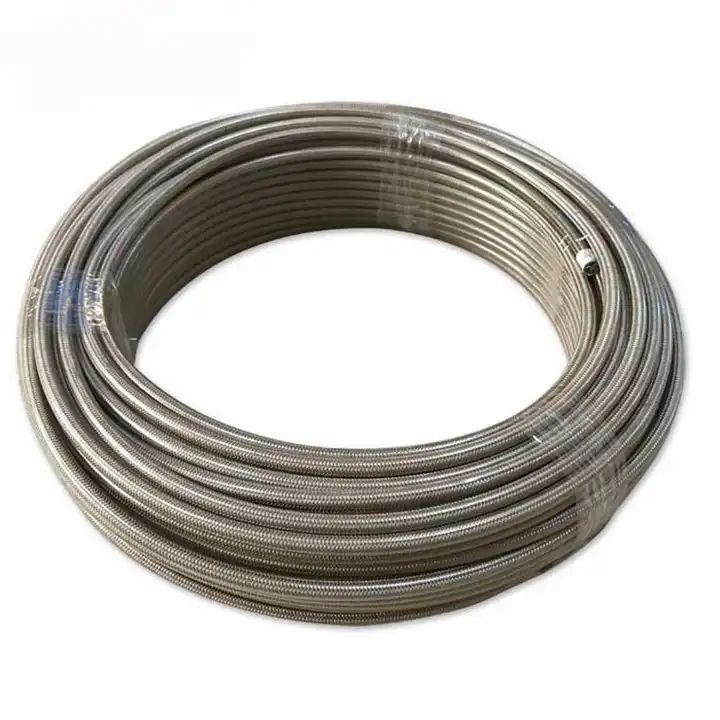
PTFE braided hoses are known for their flexibility and durability, making them easy to install and use in laboratory setups. The braided outer layer provides additional strength and support, while the PTFE inner liner ensures smooth fluid flow and minimal resistance. This combination of flexibility and durability allows PTFE braided hoses to be easily bent, twisted, and routed around laboratory equipment and fixtures without kinking or collapsing.
In addition, PTFE braided hoses are resistant to abrasion, tearing, and punctures, ensuring long-term reliability and performance in demanding laboratory environments. They can withstand repeated bending and flexing without losing their shape or integrity, making them suitable for use in applications where hoses are subject to frequent movement or vibration. For example, in a biology laboratory where hoses are used to transfer fluids between different pieces of equipment, PTFE braided hoses can be easily maneuvered and repositioned without the risk of damage.
Low Friction and Non-Stick Properties
PTFE has low friction and non-stick properties, which make PTFE braided hoses ideal for use in applications where fluid flow needs to be smooth and unobstructed. The smooth inner surface of PTFE braided hoses reduces friction and pressure drop, allowing for efficient fluid transfer and minimizing the risk of clogging or blockages. This is particularly important in laboratories where accurate and precise fluid delivery is critical, such as in chromatography, spectroscopy, or other analytical techniques.
The non-stick properties of PTFE also make it easy to clean and maintain PTFE braided hoses, reducing the risk of contamination and ensuring the accuracy of experimental results. After use, PTFE braided hoses can be easily flushed with water or a suitable cleaning solution to remove any残留 substances or debris. This not only saves time and effort but also extends the lifespan of the hoses. For example, in a pharmaceutical laboratory where hoses are used to transfer drugs or other sensitive substances, the non-stick properties of PTFE braided hoses prevent the buildup of residues and ensure the purity of the transferred fluids.
Hygiene and Cleanliness
In laboratory environments, hygiene and cleanliness are of utmost importance to prevent contamination and ensure the accuracy of experimental results. PTFE braided hoses are inherently hygienic and resistant to microbial growth, making them suitable for use in applications where strict cleanliness standards are required, such as in food and beverage testing, pharmaceutical manufacturing, or biotechnology research.
The smooth, non-porous surface of PTFE prevents the accumulation of dirt, bacteria, and other contaminants, making it easy to clean and sterilize PTFE braided hoses. They can be autoclaved, steam cleaned, or chemically disinfected without affecting their performance or integrity. This ensures that PTFE braided hoses meet the highest standards of hygiene and cleanliness, making them a reliable choice for laboratory applications. For example, in a food safety laboratory where hoses are used to transfer samples for testing, PTFE braided hoses can be easily cleaned and sterilized between uses to prevent cross-contamination.
Compatibility with Different Fluids and Gases
PTFE braided hoses are compatible with a wide range of fluids and gases, including water, air, chemicals, solvents, and gases such as nitrogen, oxygen, and helium. This versatility makes them suitable for use in a variety of laboratory applications, from simple fluid transfer to complex chemical reactions and analytical techniques.
Whether you need to transfer a small volume of a highly reactive chemical or a large volume of a inert gas, PTFE braided hoses can provide a reliable and efficient solution. They can be used in conjunction with different types of laboratory equipment, such as pumps, valves, and connectors, to create a complete fluid transfer system. For example, in a gas chromatography laboratory where different gases are used for sample analysis, PTFE braided hoses can be used to connect the gas cylinders to the chromatography instrument, ensuring accurate and precise gas delivery.
Customization Options
As a PTFE Braided Hose supplier, we understand that every laboratory has unique requirements and specifications. That's why we offer a wide range of customization options to meet the specific needs of our customers. We can customize the length, diameter, and end fittings of PTFE braided hoses to ensure a perfect fit for your laboratory setup.
In addition, we can provide PTFE braided hoses with different levels of braiding density and reinforcement to meet the specific pressure and temperature requirements of your application. Whether you need a high-pressure hose for a hydraulic system or a low-pressure hose for a simple fluid transfer, we can provide a customized solution that meets your needs. For example, if you need a PTFE braided hose with a specific length and end fitting for a particular experiment, we can manufacture it according to your specifications.
Cost-Effectiveness
While PTFE braided hoses may have a higher initial cost compared to some other types of hoses, they offer long-term cost savings due to their durability, reliability, and low maintenance requirements. The exceptional chemical and temperature resistance of PTFE braided hoses means that they have a longer lifespan and require less frequent replacement compared to traditional hoses.
In addition, the low friction and non-stick properties of PTFE braided hoses reduce energy consumption and maintenance costs by minimizing pressure drop and preventing clogging. This results in lower operating costs and increased efficiency in laboratory operations. For example, in a large-scale laboratory where hoses are used extensively, the cost savings from using PTFE braided hoses can be significant over time.
Conclusion
In conclusion, the advantages of using PTFE braided hoses in laboratories are numerous and significant. Their exceptional chemical resistance, temperature resistance, flexibility, durability, low friction, non-stick properties, hygiene, compatibility, customization options, and cost-effectiveness make them an ideal choice for a wide range of laboratory applications.
As a leading PTFE Braided Hose supplier, we are committed to providing high-quality hoses that meet the highest standards of performance and reliability. Our PTFE braided hoses are manufactured using the latest technology and materials to ensure the best possible quality and performance. Whether you are a research laboratory, a pharmaceutical company, a food and beverage manufacturer, or any other type of laboratory, we can provide you with the right PTFE braided hose solution for your needs.
If you are interested in learning more about our PTFE braided hoses or would like to discuss your specific requirements, please feel free to contact us. We look forward to the opportunity to work with you and provide you with the best possible PTFE braided hose solution for your laboratory.
References
- "PTFE: Properties and Applications." Chemical Engineering Handbook.
- "Laboratory Hoses: A Guide to Selection and Use." Laboratory Equipment Magazine.
- "Advantages of PTFE in Laboratory Applications." Journal of Laboratory Research.