


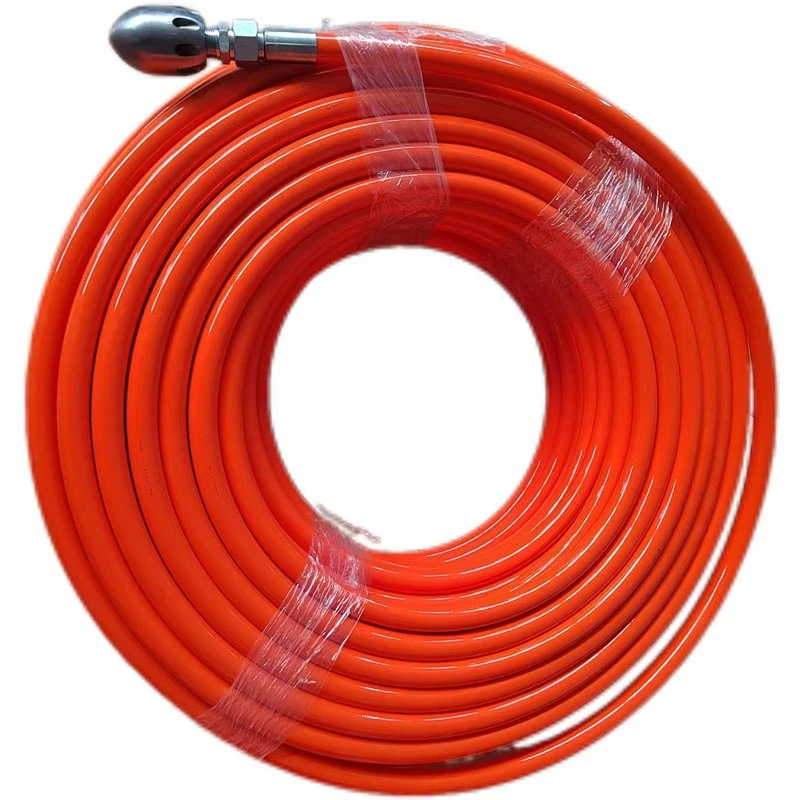
The vast majority of household and commercial standard Drain Cleaning Hose on the market are reusable products rather than one‑off consumables. These hoses are mainly manufactured from flexible PVC, modified EVA and rubber‑plastic composite materials. They feature decent water resistance, flexibility and basic anti‑aging performance. Designed for repeated water passage and drainage cleaning from the factory, they do not need to be discarded after single use under normal working conditions. Proper maintenance enables multiple cycles of application and effectively cuts operating costs.
Whether a hose can be safely reused depends largely on application scenarios, cleaning and maintenance routines, as well as component wear conditions. In household settings where the hose handles washing‑machine drainage, air‑conditioner condensate discharge, sink floor‑drain cleaning and sewage removal on floors, the water carries little corrosive impurities and reuse is highly secure. After each operation, flush residual water stains, sediment, hair and other debris off the pipe wall with clean water. Empty standing water inside the tube and hang it up for ventilated drying. Storing the hose in sealed humid environments must be avoided. These practices effectively stop mildew, bad odors and bacterial reproduction and sustain normal service.
Still, reuse is not recommended under special circumstances. If the hose discharges chemical wastewater, strong‑acid or strong‑alkaline cleaning effluents, or heavily oil‑contaminated kitchen sewage, corrosive substances and thick grease will permeate and adhere to pipe walls. Conventional washing cannot achieve thorough decontamination. Secondary pollution will take place in subsequent use, and material corrosion and aging will accelerate accordingly. In cases where the hose suffers blockage, fermentation, black‑mildew growth and stubborn odors, complete removal of mildew spores is impossible even after cleaning. Continuous use may contaminate drainage pipelines and impair environmental hygiene, so direct replacement is required.
Besides, physical aging and damage mark the termination point for reuse. Once the hose shows hardening and brittleness, surface cracks, joint damage, yellow‑black discoloration, loss of elasticity, failure to rebound after bending, frequent water leakage or local bulging deformation, its internal structure has deteriorated even without obvious surface damage. Further reuse brings hidden risks such as water seepage, pipe bursting and blockage, which calls for immediate replacement. To sum up, cyclic long‑term use is feasible with proper maintenance in clean environments, while replacement shall be carried out in polluted conditions or upon aging and physical damage.