


Dirt is prone to accumulating on the inner wall of Drain Cleaning Hose. Compared with rigid smooth PVC drainage pipes and stainless‑steel pipelines, flexible cleaning hoses develop fouling faster and accumulate more contaminants. Without regular cleaning, persistent dirt layers will form to block pipelines and produce unpleasant odors. Material characteristics, drainage water quality and user habits jointly lead to this phenomenon.
From the perspective of material structure, the inner wall of ordinary Drain Cleaning Hose is not mirror‑smooth. Tiny invisible pits, pores and textures remain after rubber‑plastic molding. Micro particles of sediment, dust and limescale in flowing water embed into these wall pores and form initial dirt layers. For rigid pipes, compact and smooth inner surfaces stop contaminants from adhering, and plain water washes away residues effortlessly. Besides, frequent bending and folding during hose usage create micro creases on pipe walls. These creases readily trap debris and become key zones for dirt deposition.
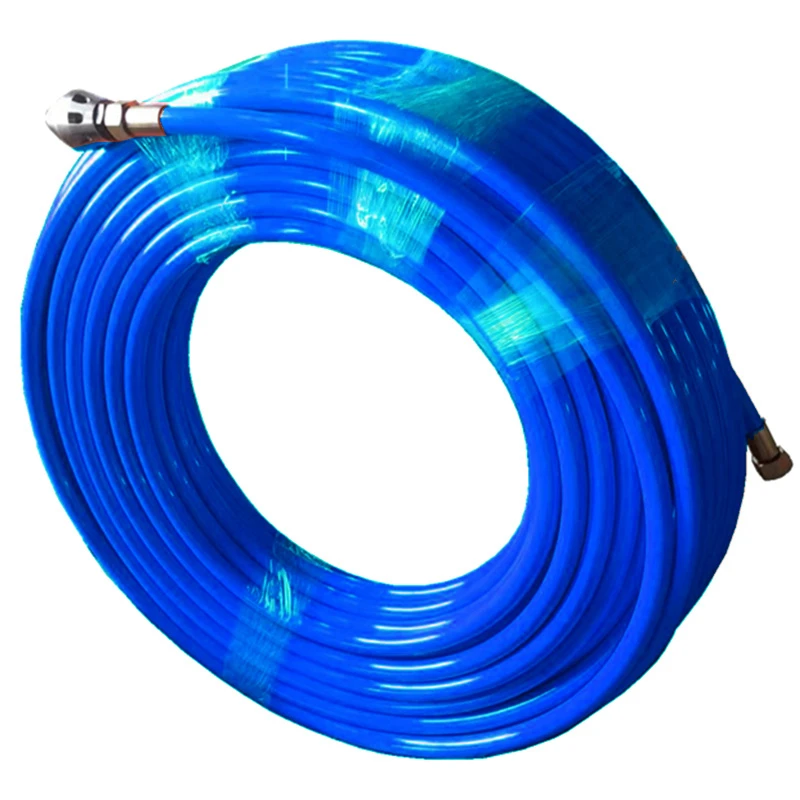
Water quality in different application scenarios brings huge disparities in fouling severity. Household drainage from sinks and floor drains contains skin debris, hair and dust. Kitchen wastewater carries grease and food residues. Washing‑machine effluent holds laundry‑detergent remnants and fabric fibers. Such sticky contaminants stick to primary dirt layers on pipe walls as water flows through. Layer‑by‑layer deposition creates stubborn yellowish or dark‑brown oil sludge and mud scale over time. Caked dirt reduces pipe inner diameter remarkably and lowers drainage efficiency.
Bad usage habits speed up dirt adhesion and deterioration. Many users store hoses directly after use without flushing or emptying residual water. Standing wastewater settles inside sealed tubes. Contaminants firmly attach to inner surfaces. Meanwhile, humid enclosed environments breed bacteria, mildew and algae. They combine with debris to form biological sludge that is hard to remove and gives off rotten and musty smells. For hoses left idle for extended periods, stagnant‑water fermentation doubles the speed of dirt hardening.
Even though Drain Cleaning Hose is susceptible to fouling, related problems can be avoided via routine maintenance. After each application, rinse the hose with clean water for over 30 seconds. Drain all standing water and hang the hose for ventilated drying. Weekly flushing with diluted white vinegar or special pipe cleaners dissolves limescale and grease. Inspect internal conditions at intervals and clear trapped hair and caked dirt. Consistent proper cleaning prevents stubborn fouling, maintains inner‑wall cleanliness and guarantees smooth drainage.