


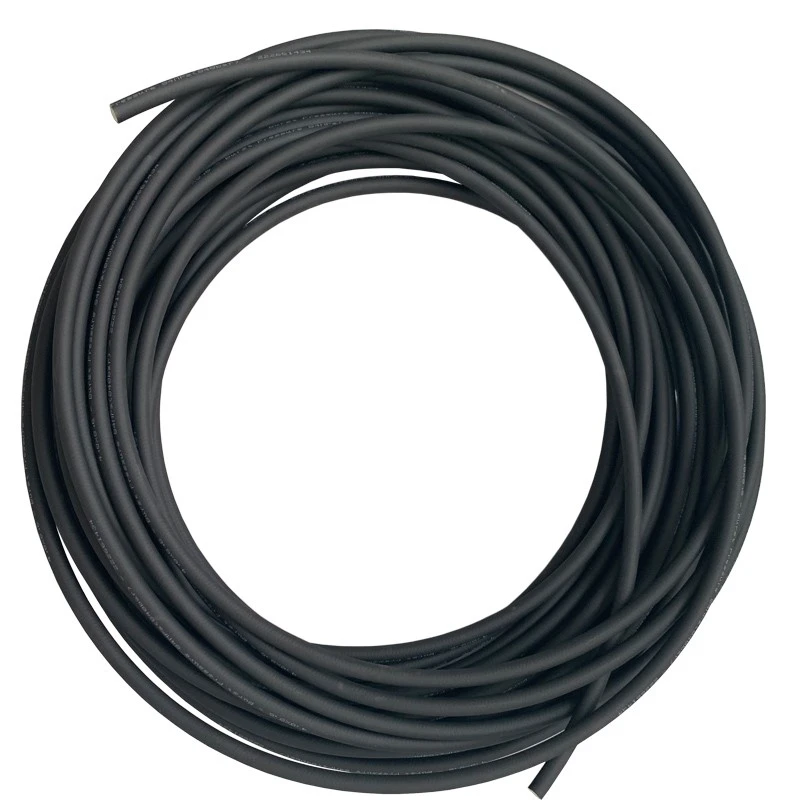
Both the High Pressure Grease Hose and a standard lubricant hose can be used to transport lubricants, but they are designed for different operating conditions and applications. The High Pressure Grease Hose is generally used in lubrication systems that require pressurized lubricant delivery, while a standard lubricant hose is more commonly used for lower-pressure applications and relatively simple lubricant transfer.
First, their intended uses can be different. A standard lubricant hose mainly performs basic lubricant transfer, such as connecting a lubricant reservoir to a general lubrication point and delivering lubricant to the components that require it. The High Pressure Grease Hose, on the other hand, is more commonly used in systems where lubrication pumps or similar equipment provide pressurized lubricant delivery. It can transport lubricant to lubrication points that are located farther away, are more difficult to access, or require a relatively higher delivery pressure.
Their operating environments may also differ. Standard lubricant hoses are generally used in relatively stable conditions where pressure, vibration, and mechanical impact are limited. High Pressure Grease Hoses may be installed in industrial machinery, construction equipment, automatic lubrication systems, and other applications with more demanding operating conditions. In such environments, the hose may be exposed to pressure, vibration, bending, and temperature fluctuations at the same time. Therefore, the High Pressure Grease Hose needs to maintain reliable performance under a wider range of working conditions.
There may also be differences in construction and materials. Hoses intended for high-pressure lubrication applications need to withstand pressure and the mechanical stresses that can occur during long-term operation. Their construction is therefore generally designed with greater emphasis on stability and durability. Standard lubricant hoses are mainly intended to meet the requirements of general lubricant transfer. The specific differences depend on the materials, construction, and intended application of each hose.
Installation requirements can also vary depending on the operating environment. In particular, the High Pressure Grease Hose should be protected from excessive bending, twisting, compression, and prolonged contact with sharp or abrasive components. Although standard lubricant hoses may be used in less demanding environments, they should also be protected from obvious physical damage and improper installation.
In terms of applications, standard lubricant hoses are generally suitable for basic lubricant transfer in general machinery, while the High Pressure Grease Hose is more suitable for centralized lubrication systems, automatic lubrication equipment, and machinery that requires pressurized lubricant delivery. For applications involving multiple lubrication points, continuous equipment operation, or relatively long lubricant delivery paths, a High Pressure Grease Hose may be a more suitable choice.
It is important to note that the appropriate hose should not be selected solely based on whether it is described as "high pressure" or "standard." Factors such as lubricant type, equipment operating conditions, installation location, ambient temperature, and the way the hose is routed should also be considered. Matching the hose to the actual working conditions helps maintain stable lubricant delivery.
Overall, the key difference between a High Pressure Grease Hose and a standard lubricant hose is not simply their appearance. Rather, they are intended for different operating conditions, lubricant delivery methods, and application scenarios. Selecting the appropriate hose according to the actual equipment requirements can help support reliable operation of the lubrication system.