


Micro Test Hoses feature favorable low‑temperature adaptability and function normally in most common cold‑weather scenarios including winter outdoor sites and cold industrial workshops without special modification. Pressure‑transmission accuracy, sealing capacity and overall stability stay largely unaffected. They satisfy pressure‑measurement demands for northern winter outdoor machinery and cold‑shop equipment and serve as dependable pressure‑measuring accessories for low‑temperature applications.
Under mild above‑zero cold conditions such as open‑air winter sites and cool ventilated workshops free of extreme frost, the comprehensive performance of Micro Test Hoses remains intact. Tubes retain original flexibility without hardening, brittleness or shrinkage deformation. Sealing stays sound and pressure‑signal transfer stays sensitive with negligible loss. Accurate and stable readings support equipment pressure monitoring, calibration and fault diagnosis just as effectively as under room‑temperature conditions for routine cold‑weather operations.
Under mild sub‑zero conditions, the hoses still operate well with only minor flexibility adjustments and no loss of core functions. A slight hardness increase occurs compared with room‑temperature status, yet structural integrity holds without cracking or functional failure. Sealing and leakage‑resistance remain effective. Under such circumstances, refrain from intentional bending, rough pulling and violent twisting. Proper fixed installation for static pressure measurement delivers stable performance for winter‑exposed construction machinery and open‑air hydraulic equipment.
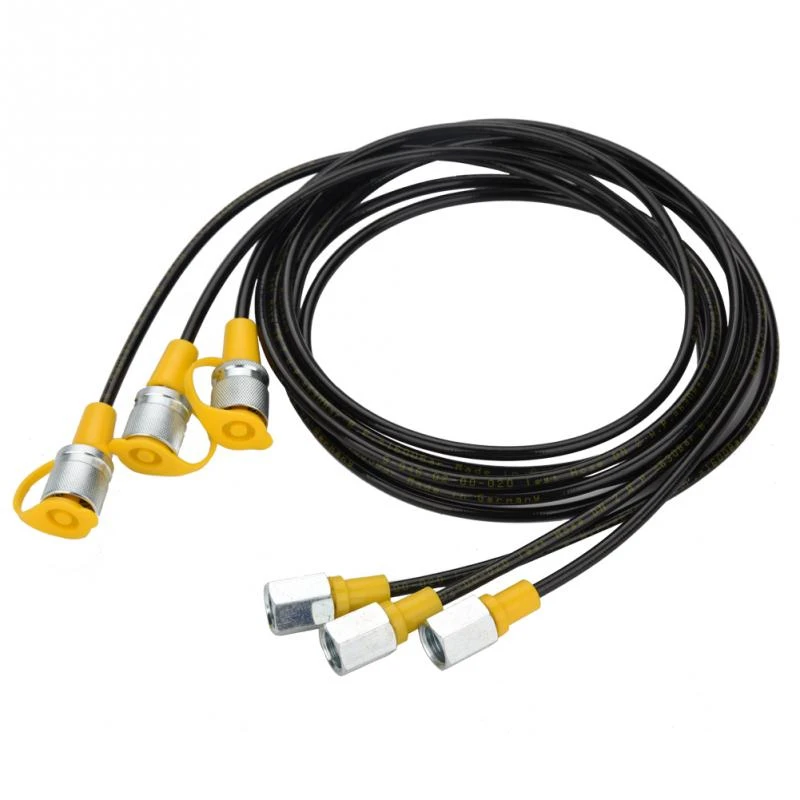
Extremely low‑temperature settings impose usage restrictions, which constitute the main cold‑climate concern. Prolonged exposure to severe cold greatly reduces material toughness and aggravates hardening and brittleness. Though immediate rupture does not occur, resistance against bending, pulling and friction drops sharply. Sharp bending, repeated folding or forced external compression easily generates micro‑cracks and local deformation, subsequently causing leakage and measurement abnormalities. Connection‑joint fitting also slightly deteriorates under extreme cold, so fastening status requires prior inspection.
Several simple protective measures enhance stability for low‑temperature deployment. Complete layout and fixation during installation to reduce later readjustment and bending. Limit suspended tubing and stress points and guard against external collision and squeezing. In severely cold regions, simple insulating sleeves can isolate frigid air and preserve tube flexibility. When cold equipment starts up, allow low‑speed preheating until working conditions stabilize before high‑precision pressure measurement to mitigate minor cold‑related influences.
To conclude, Micro Test Hoses possess good cold resistance and work reliably for most low‑temperature applications. Only in extremely frigid environments must violent physical manipulation be avoided alongside basic protection. Their low‑temperature adaptability fully meets regular industrial and outdoor equipment requirements.