


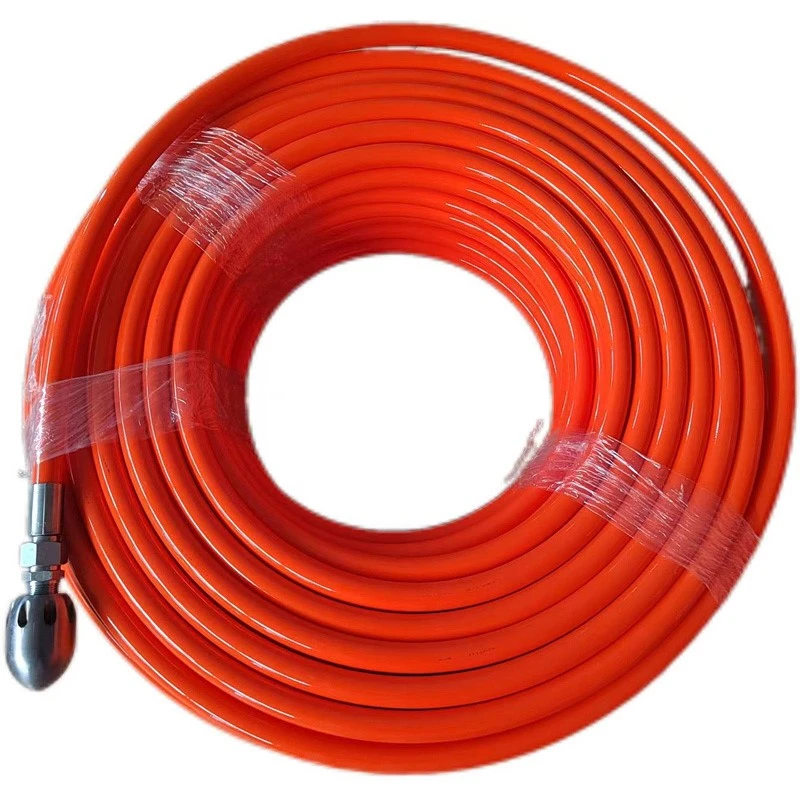
Selecting the proper length of Drain Cleaning Hose follows the core principle of matching real‑world usage scenarios, balancing practicality, convenience and service life. There is no need to pursue an unnecessarily long unit, nor should you pick one so short that normal operations are compromised. Comprehensive consideration of operating environments, working distances and usage habits helps you find the well‑fitted length. Indoor household settings represent the most common application, including bathrooms, kitchens, indoor floor drain cleaning and indoor standing‑water removal. Such locations feature fixed, short operating distances and relatively confined spaces, making short‑length hoses a sensible choice. Short hoses deliver flexible handling for turns and movements. They prevent tube stacking and knotting while occupying minimal storage space for easy coiling and placement, fully meeting demands for minor indoor water removal and simple pipeline cleaning tasks.
Outdoor residential applications cover balcony drainage, yard surface cleaning, outdoor unit water disposal and pond water exchange. Operating distances expand in these settings, and short hoses may become taut and strained, hindering smooth workflows. Medium‑long hoses are recommended here. They support extended outdoor drainage without cumbersome excess tubing. Moderate length reduces stacking surplus material, lowering risks of jamming and abrasion during dragging for small‑and‑medium outdoor spaces such as yards and balconies.
For large‑scale, long‑range operations including storefront cleaning, shallow site drainage and extensive outdoor standing‑water clearance, long‑length hoses become necessary to remove distance‑related restrictions for drainage and cleaning. When using long hoses, coil them neatly after work. Random stacking may cause distortion and bending, which can gradually undermine flexibility and service life.
Reserving reasonable length allowance is an easily overlooked critical detail. Do not purchase strictly according to measured working distance for any scenario. Keep an extra 1‑2‑meter margin. Hoses require bending, turning and slight shifting during operation. Fully stretched tubes generate tension under water pressure, accelerating aging and deformation over time. Tension may also trigger water‑flow vibration and poor ground contact. Sufficient allowance maintains relaxed tubing for smoother handling and better component protection.
Two common purchasing pitfalls deserve attention. Some buyers assume longer hoses fit more purposes. In reality, excessive length creates tangled piles in confined spaces, tripping hazards and residual water inside the tube. Stagnant water accumulates grime and odors and increases cleaning burdens. Others prioritize ultra‑short models purely for compact storage. Insufficient length forces repeated pulling and repositioning and limits coverage, lowering overall drainage and cleaning efficiency. In summary, prioritize scenario‑appropriate length. Short hoses serve compact indoor spaces; medium‑long options fit small‑and‑medium outdoor areas; long‑length units support large‑site operations. Combined with proper allowance, users achieve favorable handling and enhanced durability.