


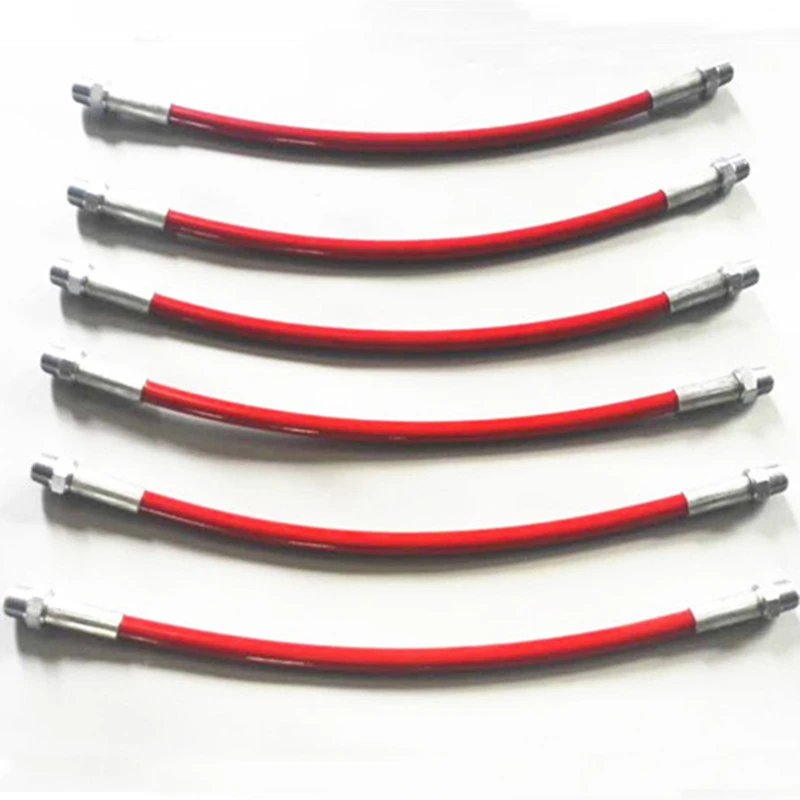
High Pressure CNG Hose is mainly used for compressed natural gas transfer and equipment connections. Its advantages are reflected not only in its flexible construction but also in its installation adaptability, connection convenience, and material properties. For companies in the oil and gas, energy, and industrial manufacturing sectors, selecting an appropriate High Pressure CNG Hose helps meet the connection requirements of different equipment and pipeline systems.
First, good flexibility is one of the main advantages of High Pressure CNG Hose. Traditional rigid pipelines usually require fixed installation according to equipment positions, while flexible hoses can bend within their permitted limits to accommodate different connection directions. This characteristic makes them suitable for applications involving complex equipment layouts or limited installation space, helping reduce certain pipeline installation difficulties.
Second, High Pressure CNG Hose provides greater connection flexibility. In industrial production environments, equipment connection points may be positioned differently, and some equipment may need to be inspected, maintained, or repositioned. Within its design limits, High Pressure CNG Hose can provide flexible connections between different devices, making pipeline arrangements and equipment connections more convenient.
Third, it offers a stable structural design. High Pressure CNG Hose typically consists of an inner tube, reinforcement layer, and outer protective cover. Each component serves a different purpose. The inner tube carries the natural gas, the reinforcement layer helps withstand the required pressure loads, and the outer cover protects the internal structure from external environmental influences. A well-designed structure helps maintain stable performance under the intended operating conditions.
Fourth, certain products offer good abrasion resistance. In industrial environments, hoses may be exposed to equipment vibrations, friction, and contact with surrounding objects. Depending on the material used, the outer protective cover can provide a certain level of protection against external wear and help reduce damage to the internal structure. However, abrasion resistance depends on the specific materials and product construction and should not be interpreted as complete protection against wear.
Fifth, High Pressure CNG Hose can offer adaptability to different working environments. Depending on the materials and manufacturing processes used, different products can be designed for specific temperature ranges and environmental conditions. In applications involving vibration, limited installation space, or complex equipment layouts, flexible hoses can provide more convenient connection solutions.
Sixth, installation and inspection can be relatively convenient. Compared with certain complex rigid pipeline arrangements, flexible hoses can simplify installation in some connection locations. Properly arranged hoses can also make connection points easier to access and inspect during equipment maintenance.
In addition, suitable High Pressure CNG Hose products must provide reliable sealing performance. Natural gas is flammable and potentially explosive, so leakage prevention is essential during transportation. The hose body, fittings, and connection points must all meet the applicable safety requirements.
It is important to note that the actual advantages of High Pressure CNG Hose depend on its materials, construction, manufacturing processes, and operating environment. Different products may offer different performance characteristics. Flexibility or appearance alone should never be used to determine whether a hose is suitable for a particular high-pressure natural gas application.
Overall, the main advantages of High Pressure CNG Hose include flexible connections, convenient installation, structural stability, external protection, and adaptability to suitable operating environments. Proper selection and correct use help meet the connection requirements of different natural gas transfer systems.