


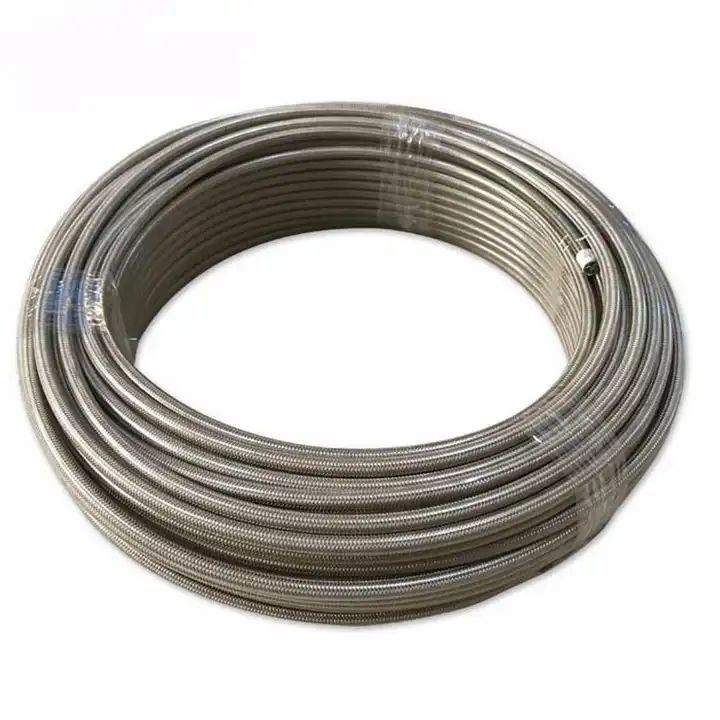
Shandong Danflex Hose Co., Ltd. is one of the leading manufacturers and suppliers of ptfe braided hose in China, also supporting customized service. Be free to buy cheap ptfe braided hose for sale here and get quotation from our factory. Good service and reasonable price are available.
Why choose us
Production Equipment
Our company has first-class production equipment, including advanced automated production lines, precision cutting and assembly equipment, as well as high-performance pressure testing instruments. All production equipment is regularly maintained and calibrated in accordance with international standards to ensure that each batch of hose produced meets the strict quality requirements.
Our Product
The company mainly produces Sewer Jetting Hose,Ultra High Pressure Thermoplastic Hose,SAE 100 R7 Hose,SAE 100 R8 Thermoplastic Hose,Water Jetting Hose,High Pressure Paint Spray Hose,UHP Series Ultra High Pressure Flexible Hose,High Pressure Sewer Jetting Hose,Waterblasting Lance Hose,Hydraulic Jack Hose,Micro Test Hose,Lubrication Grease Hose,CNG Hose,PTFE braided Hose,SAE100 R14 Hose,etc.
Product Application
Our products are widely used in water jet, hydraulic, oil, gas and automotive industries. From high pressure cleaning to industrial spraying to precision mechanical lubrication, DANFLEX hoses provide efficient and safe fluid transfer solutions for a wide range of industries thanks to their excellent pressure resistance, wear resistance and flexibility.
Production Market
We have high efficiency sales team and competitive price superiority, and attract customers from all over the world, we export to many countries, including Russia, USA,Europe, Mexico, Brazil, India,Singapore,Malaysia, Thailand ,Spain,Chile,Middle east and South Africa. It has been well received by customers at home and abroad.
A PTFE braided hose is a formidable hose assembly, uniquely engineered to harness the exceptional properties of Polytetrafluoroethylene and reinforce them with the muscular fortitude of a metal braid. This synthesis of materials creates a hose that is remarkably resistant to high-pressure environments and corrosive chemicals. Like Teflon, a PTFE braided hose is known for its outstanding chemical resistance, temperature resilience, and non-stick surface. These features make it ideal for conveying a wide range of fluids, from standard hydraulic oils to aggressive chemicals, without degradation or contamination.

SAE 100 R14 Hose is a high performance hydraulic hose designed for use in demanding hydraulic systems.

With excellent corrosion resistance, this hose is resistant to most chemicals and is stable in a variety of harsh chemical environments.
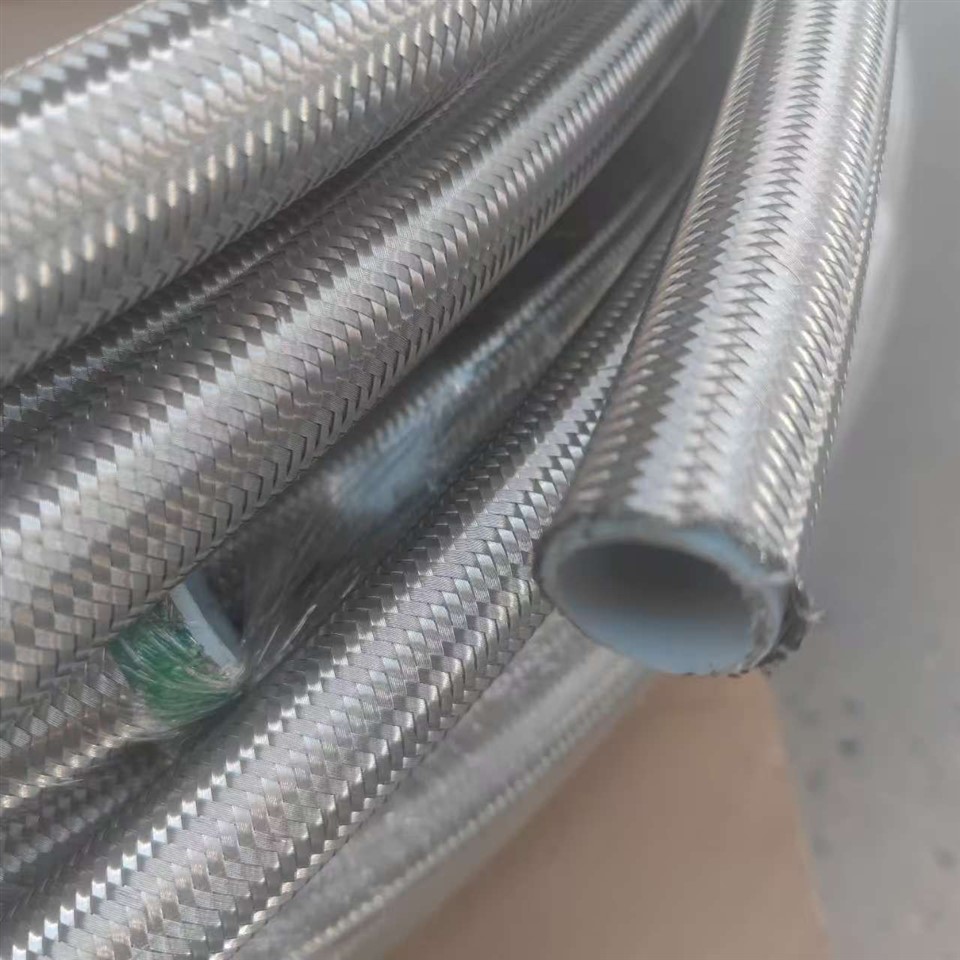
PTFE Hose is a high performance hose made of high quality polytetrafluoroethylene (PTFE) resin.

Our PTFE Teflon Hose represents the perfect combination of advanced technology and high performance.

PTFE Braided Hose is a kind of high performance pipe product, its inner layer is made of PTFE material, and the outer layer is woven with stainless steel 304. This unique structure gives it excellent performance.
What are the key benefits and properties of PTFE braided hoses?
PTFE hoses, with their array of impressive capabilities, stand as a pinnacle of engineering in fluid dynamics. Below is an overview of the key benefits and properties of PTFE braided hoses.
Wide Temperature Compatibility
The temperature resistance range of PTFE braided hoses is one of their outstanding attributes. Indeed, the majority of PTFE hoses can withstand temperatures as low as -65°F (-54°C) and as high as +400°F (+204.4°C), in some cases as high as +450°F (+232°C). Even when subjected to these extreme temperatures, PTFE hoses can maintain their structural integrity and performance. However, both the maximum temperature and desired operating pressure must be taken into account when selecting the right PTFE braided hose and size for the application. The ability to withstand a wide range of temperatures, while taking operating pressure into account, makes PTFE hoses highly versatile in a variety of industrial applications.
Chemical Resistance
PTFE braided hoses' chemical resistance is as equally remarkable as its low- and high-temperature resistance. PTFE hoses can withstand a wide range of chemicals, including aggressive acids and alkalis, which would otherwise degrade ordinary hoses. This resistance ensures a longer lifespan and safer operation in chemical processing plants and other hazardous environments.
Non-adhesive Quality
The non-adhesive quality of PTFE tubing allows substances to circulate without adhering to the inner walls, facilitating smoother, more efficient transport of materials. For example, PTFE hoses can handle substances such as adhesives, dyes, greases and even more. This non-adhesive quality also makes cleaning easier, as residues can be rinsed away with minimum effort.
Purity And Non-contaminating Nature
In terms of purity, the non-contaminating nature of PTFE is essential for industries where contamination is a concern, such as food and beverage or pharmaceuticals. The material does not leach into or taint the substances it carries, thereby preserving the integrity of the transported fluids.
Flexibility And Shock Resistance
PTFE braided hoses are renowned for their flexibility and shock resistance. They can endure jarring movements and vibrations without sustaining damage, ensuring continuous operation under dynamic conditions. This flexibility also allows for the hoses to be installed in complex configurations where rigid pipes would not be feasible.
High Flow Rates
Designed for high flow rates, PTFE hoses can handle rapid fluid movements, reducing downtime and improving efficiency. The low coefficient of friction and anti-adhesive properties of PTFE braided hoses ensure a continuous lower pressure drop during operation with good pressure rating and full vacuum.
Lightweight Design
Despite their durability, PTFE hoses are surprisingly lightweight, which simplifies installation and handling, particularly in applications where weight is a critical factor.
Durability And Economic Efficiency
Resistant to deterioration, PTFE braided hoses often exceed their expected service life, offering an economical solution over time by reducing the frequency of replacements.
Steam Compatibility
PTFE braided hoses are moisture-resistant and rated for steam up to 250 psi at 406°F, and feature low volumetric expansion. This compatibility with steam makes them ideal for sterilization processes and various scenarios requiring steam transport, further demonstrating their versatility and robustness in industrial applications.
Construction of PTFE Braided Hoses
Core Components
Inner PTFE Tube
The heart of a PTFE braided hose is its inner tube, made from PTFE (Polytetrafluoroethylene). This inner core is crucial because it serves as the primary conduit for the fluid being transferred. The PTFE tube is extruded in a smooth, uniform layer, providing a highly non-reactive surface that resists chemical interaction, making it suitable for a wide range of aggressive fluids, including acids, solvents, and gases. The smooth bore of the PTFE tube also minimizes pressure drop and ensures efficient fluid flow, which is critical for maintaining the performance and safety of fluid transfer systems.
Inner Core and Its Benefits
While the core material is predominantly PTFE, different formulations of PTFE may be used depending on the specific application. For instance, some PTFE cores may be reinforced with additives to enhance properties like conductivity or anti-static performance, which are essential in environments where static buildup could be hazardous. The inherent properties of PTFE-such as its wide temperature tolerance, non-stick characteristics, and low permeability-make it an ideal choice for applications ranging from chemical processing to food and pharmaceutical industries.
Braiding Materials
Overview of Common Braiding Materials
The outer layer of the PTFE braided hose is typically composed of a braided material, which adds mechanical strength and protects the inner PTFE tube from external damage. Common materials used for braiding include stainless steel, nylon, and polyester:
Stainless Steel: The most widely used material, stainless steel braiding provides excellent resistance to abrasion, corrosion, and high pressures. It is ideal for demanding applications in chemical processing, oil and gas, and high-temperature environments.
Nylon: Nylon braiding offers a lightweight alternative with good abrasion resistance. It is commonly used in applications where flexibility and ease of handling are important, such as in automotive and industrial settings.
Polyester: Polyester braiding is valued for its durability and resistance to environmental factors like UV radiation and moisture. It is often used in outdoor applications or where exposure to the elements is a concern.

Comparative Analysis of Different Braiding Materials and Their Applications
Stainless Steel vs. Nylon: While stainless steel offers superior strength and temperature resistance, it is heavier and less flexible than nylon. Nylon, on the other hand, provides easier installation and better flexibility, making it suitable for applications where frequent hose movement is required. However, nylon may not withstand as high pressures or temperatures as stainless steel.
Nylon vs. Polyester: Both materials are lightweight and flexible, but polyester generally offers better resistance to UV and moisture, making it a better choice for outdoor applications. Nylon may be more suitable for indoor or protected environments due to its excellent flexibility and lower cost.
Stainless Steel vs. Polyester: Stainless steel outperforms polyester in terms of pressure and temperature resistance, but polyester is more cost-effective for applications where extreme conditions are not a factor..
Teflon Braided hoses are used in many applications across different industries. Automobile, Heavy Electrical , Power, Chemical Process Industry, Pharmaceutical, Footwear, Food Processing, Defence and many more.
Teflon Braided hoses are preferred hoses for saturated steam applications like rubber vulcanization and steam cleaning equipment. Rubber hoses do not exhibit a long life in steam cycles specially when a heat cycle followed by a cold cycle. Given the low thermal expansion and high glass transition Teflon braided hose last longer than any other hoses. In this case the steam pressure is around 16 bar and temperature can reach up to 200 degree Celsius.
Chlor Alkali industry used some of the most corrosive chemicals and solvents in their process. Due to corrosion and chemical compatibility material selection is critically important. Over the years Teflon braided hoses have proved to the right choice for fluid conveyance. All the piping in Chloralkali process is generally Teflon lined pipes and where flexibility is required Teflon braided hoses are preferred.
Chemical process industry involves transferring large volume of chemical liquids from one process point to another. Teflon braided hoses have universal chemical compatibility CPI process industry and a high pressure rating even at elevated temperatures. Typical example is loading and unloading of sulphuric acid typically of 10 to 15 thousand kilo liters in fertilizer industry.
Fuel hose and oil hoses are very critical component of IC engine. Due to high temperatures and chemical compatibility Teflon braided hoses are universally used for these applications.
How to Install AN PTFE Fittings to Braided Hose
Cutting the Braided PTFE Hose
Start by cutting the PTFE hose to the desired length. First, measure the length you need and mark both ends with masking tape. Ensure that the masking tape has the cut line through the center.
We use masking tape because it holds the braid together when installing the PTFE fittings, prevents fraying, and avoids potentially damaging the fittings' threads.
Once both ends are masked, place the hose in a vice using either aluminum vice jaws or a clean cloth from your tools. Overlap the hose by about 10mm to 20mm over the vice, holding it in place while cutting. Install a 1mm cutting disc into the disc cutter, put on your goggles, and cut through the center of the masking tape.
After cutting both ends, blow out the line fully to ensure there are no metal shards inside the PTFE hose, as this can be potentially harmful to your engine. Now that you have cut the hose correctly, we can move on to installing the PTFE fittings.
Installation of the AN PTFE Fitting to the Hose
Next, we'll assemble the AN braided line. Follow these steps to install your PTFE fitting easily and quickly.
First, unscrew the fitting and remove the aluminum olive from the center. Set the olive aside, as you will need it shortly.
Push the end of the AN fitting over the braided hose with the tapered edge pointing toward the end of the line. Install the olive at the end of the line between the braid and the PTFE, ensuring the tapered edge is pointing inward. You will know it is installed correctly when the PTFE inner of the hose sits against the lip inside the olive, as shown in the photo below.
Apply some grease or WD-40 to the male end of the PTFE fitting and start pushing it into the PTFE line. You will know it's done when the end of the olive touches the threads.
Next, pull the female part of the AN fitting down the line and thread it onto the base of the fitting by hand. Go as far as you can, then place the fitting into the vice with a cloth or jaws. Ensure the fitting is seated correctly in the vice with a few millimeters of overlap to avoid damaging the spanner or fitting, and tighten the female end as much as possible.
The best method we have found is to turn with one motion without stopping; this seems to make it easier to screw the fitting down. The fitting will likely not fully bottom out against the female part, as the olive is what seals the line. Once the fitting has been screwed down as far as you can, you're all done!
Please pressure test the line before installation to ensure there are no leaks, and then you can install it on the car!
PTFE Braided Hose: Factors Affecting Long Service Life
In addition to the quality of PTFE's raw materials, the service life of PTFE hoses is influenced by the following external factors:
Operating Pressure
Product hoses are designed to work continuously under the specified maximum working pressure. Generally speaking, the working pressure should be a quarter of the minimum burst pressure of the hose. Excessive pressure can cause the hose to rupture.
Pressure Surge
Almost all hydraulic systems experience pressure fluctuations that may exceed the safety valve setting. Exposing the hose to surge pressures above the maximum operating pressure will shorten its lifespan. Surge (a rapid transient pressure rise) may not be indicated on many standard pressure gauges but can be measured with electronic equipment. In systems with severe surges, choose a hose with a higher maximum operating pressure.
Burst Pressure
Burst pressure values are test values that apply to hose assemblies that have not been used and have been assembled for less than 30 days.
High Pressure
High-pressure gas systems, especially those exceeding 250 psi, can be very dangerous. They should be fully protected from external shocks and mechanical or chemical damage. Proper precautions should also be taken to prevent whipping in the event of a malfunction.
Operating Temperature
PTFE hoses have a specific temperature limit, with a working temperature range of -65°F to 260°F. Prolonged exposure to temperatures above 260°F can cause deformation, significantly impacting the product's performance. The specified working temperature refers to the highest temperature of the fluid or gas being transported; therefore, the maximum temperature for each hose may not apply to all fluids or gases. Continuous use at maximum temperature and pressure should be avoided, as it can deteriorate the physical properties of the hoses and fittings, reducing their service life.
Bending Radius
The recommended minimum bending radius is based on the maximum working pressure. Bending the hose beyond the specified minimum radius decreases the safe operating pressure and reduces its service life.
Vacuum Operation
The maximum negative pressure for hoses rated -16 and larger applies only to hoses that are not damaged or kinked externally. If -16 and larger hoses require greater negative pressure, it is recommended to use internal support coils.
Hose Assembly Inspection
Hose assemblies in use should be checked frequently for leaks, kinks, corrosion, wear, or any other signs of damage. Worn or damaged hose assemblies should be removed from service and replaced immediately.
Our Factory
SHANDONG DANFLEX HOSE CO.,LTD. was founded in 2 0 0 9, located in Ningjin county, Dezhou city ,Shandong province, China.Specializing in the production of thermoplastic ultra high pressure hose and hydraulic hose with high tensile synthetic fiber or steel wire reinforcement for a working pressure range of 2 0 0 to 4 0 0 0 bar and inner diameters ranging from 3 to 2 5 mm.


FAQ
Hot Tags: ptfe braided hose, China ptfe braided hose manufacturers, suppliers, factory, teflon water hose, PTFE Hose, PTFE Teflon Hose, teflon gas hose, fluoroplastic hose, SAE 100 R14 Teflonning Hose


