

Can an Airless Spray Hose be Used for Spraying in Corrosive Environments?
As a seasoned supplier of airless spray hoses, I often encounter inquiries from customers regarding the suitability of our products for use in corrosive environments. This is a critical question, as the performance and longevity of the spray hose can be significantly affected by the corrosive nature of the substances being sprayed or the surrounding environment. In this blog post, I will delve into the factors that determine whether an airless spray hose can be used in corrosive settings, and provide insights based on our extensive experience in the industry.
Understanding Corrosive Environments
Corrosive environments can be broadly classified into two categories: chemical corrosion and environmental corrosion. Chemical corrosion occurs when the spray hose comes into contact with corrosive chemicals such as acids, alkalis, solvents, or other reactive substances. These chemicals can react with the materials of the hose, causing degradation, weakening, and ultimately failure. Environmental corrosion, on the other hand, is caused by factors such as humidity, saltwater, and exposure to harsh weather conditions. These elements can lead to rust, oxidation, and other forms of deterioration over time.
Factors Affecting the Suitability of Airless Spray Hoses in Corrosive Environments
- Hose Material
The material of the airless spray hose plays a crucial role in determining its resistance to corrosion. Different materials have varying degrees of chemical resistance, and choosing the right material is essential for ensuring the longevity and performance of the hose in corrosive environments.
- Rubber Hoses: Rubber hoses are commonly used in airless spray applications due to their flexibility and durability. However, not all rubber materials are suitable for corrosive environments. Natural rubber, for example, is highly susceptible to chemical attack and is not recommended for use with corrosive chemicals. On the other hand, synthetic rubbers such as neoprene, nitrile, and EPDM offer better chemical resistance and can be used in a wider range of corrosive applications.
- Thermoplastic Hoses: Thermoplastic hoses are another popular choice for airless spray applications. They are lightweight, flexible, and offer excellent chemical resistance. Materials such as polyurethane, polyethylene, and PVC are commonly used in thermoplastic hoses, and they can be selected based on the specific corrosive chemicals they will be exposed to.
- Reinforcement Layers
In addition to the inner tube material, the reinforcement layers of the airless spray hose also contribute to its overall resistance to corrosion. The reinforcement layers provide strength and support to the hose, preventing it from bursting under high pressure.
- Braided Reinforcement: Braided reinforcement is a common type of reinforcement used in airless spray hoses. It consists of multiple layers of high-strength fibers, such as polyester, nylon, or aramid, woven together in a braided pattern. Braided reinforcement provides excellent flexibility and resistance to kinking, making it suitable for a wide range of applications. However, the choice of reinforcement material can also affect the hose's resistance to corrosion. For example, aramid fiber braided hoses offer superior strength and chemical resistance compared to polyester or nylon braided hoses. You can learn more about Aramid Fiber Braided Paint Spray Hose.
- Spiral Reinforcement: Spiral reinforcement is another type of reinforcement used in airless spray hoses. It consists of a single layer of high-strength wire or fiber wound in a spiral pattern around the inner tube. Spiral reinforcement provides excellent resistance to high pressure and is commonly used in heavy-duty applications. However, it may not be as flexible as braided reinforcement and may be more susceptible to corrosion in certain environments.
- End Fittings
The end fittings of the airless spray hose are also important considerations when using the hose in corrosive environments. The end fittings are the connection points between the hose and the spray gun or other equipment, and they need to be resistant to corrosion to ensure a secure and leak-free connection.
- Stainless Steel Fittings: Stainless steel is a popular choice for end fittings in corrosive environments due to its excellent corrosion resistance. Stainless steel fittings are durable, long-lasting, and can withstand exposure to a wide range of chemicals and environmental conditions.
- Brass Fittings: Brass fittings are another common choice for end fittings in airless spray hoses. They are relatively inexpensive and offer good corrosion resistance in many applications. However, brass fittings may not be suitable for use with certain corrosive chemicals, such as acids or ammonia, and they may require additional protection or coating to prevent corrosion.
Our Product Offerings for Corrosive Environments
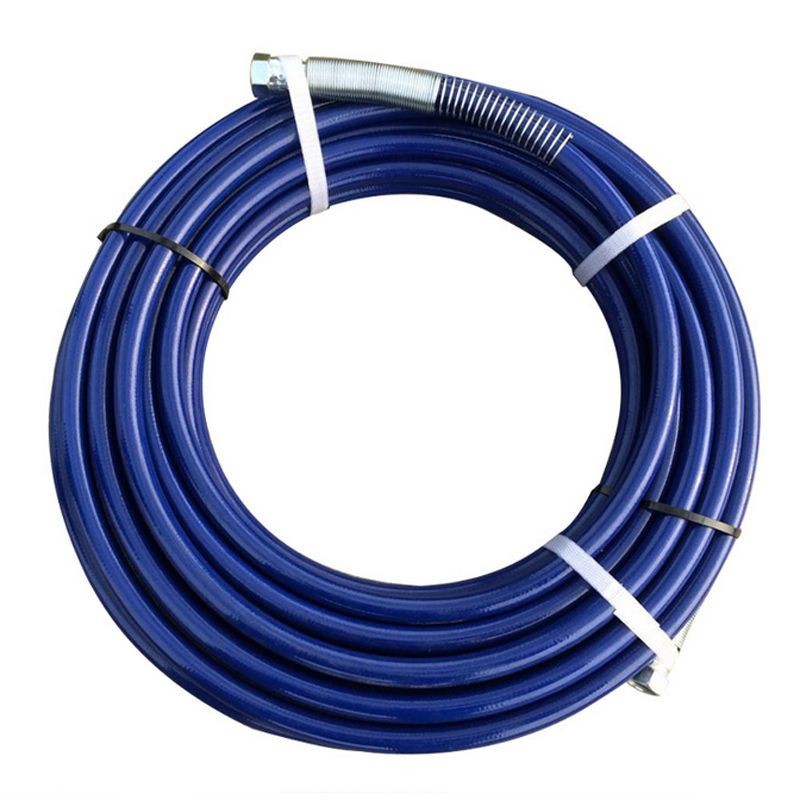
At our company, we offer a wide range of airless spray hoses that are specifically designed for use in corrosive environments. Our hoses are made from high-quality materials and are engineered to provide excellent chemical resistance, durability, and performance.
- High Pressure Paint Spray Hose: Our high-pressure paint spray hoses are designed for use with a variety of paints, coatings, and other corrosive chemicals. They are made from synthetic rubber or thermoplastic materials and are reinforced with high-strength fibers or wire to provide excellent resistance to high pressure and chemical attack.
- High Pressure Spray Hose: Our high-pressure spray hoses are suitable for a wide range of applications, including industrial cleaning, agricultural spraying, and automotive painting. They are available in different sizes and configurations to meet the specific needs of our customers, and they are designed to provide reliable performance in corrosive environments.
Conclusion
In conclusion, an airless spray hose can be used for spraying in corrosive environments, but it is important to choose the right hose material, reinforcement layers, and end fittings to ensure its suitability and performance. At our company, we have the expertise and experience to help you select the best airless spray hose for your specific application. Whether you need a hose for use with corrosive chemicals, in harsh environmental conditions, or for high-pressure applications, we can provide you with a solution that meets your needs.
If you are interested in learning more about our airless spray hoses or would like to discuss your specific requirements, please do not hesitate to contact us. We are always happy to assist you and look forward to the opportunity to work with you on your next project.

References
- "Handbook of Chemical Resistance of Elastomers" by K. C. Frisch and L. P. Bucha
- "Corrosion Resistance of Plastics and Elastomers" by R. J. Young and P. A. Lovell
- "Airless Spraying Technology" by John W. Daly