

As a supplier of Teflon hoses, I often encounter questions from customers regarding the suitability of Teflon hoses for gas transfer. This topic is of great importance as the wrong choice of hose can lead to safety hazards and inefficiencies in gas transfer operations. In this blog, I will delve into the properties of Teflon hoses, their compatibility with different gases, and the factors to consider when using them for gas transfer.
Properties of Teflon Hoses
Teflon, also known as polytetrafluoroethylene (PTFE), is a synthetic fluoropolymer with a wide range of exceptional properties that make it a popular choice for various industrial applications. Here are some of the key properties of Teflon hoses:
Chemical Resistance
Teflon is highly resistant to a wide variety of chemicals, including acids, bases, solvents, and corrosive gases. This chemical resistance makes Teflon hoses suitable for transferring gases that may be reactive or corrosive. For example, in the chemical industry, Teflon hoses can be used to transfer gases such as chlorine, hydrogen fluoride, and sulfur dioxide without the risk of chemical degradation.
Temperature Resistance
Teflon has excellent temperature resistance, with a continuous service temperature range from -200°C to 260°C (-328°F to 500°F). This wide temperature range allows Teflon hoses to be used in both high - temperature and low - temperature gas transfer applications. For instance, in cryogenic applications where gases such as liquid nitrogen or oxygen are transferred, Teflon hoses can maintain their flexibility and integrity at extremely low temperatures.

Low Friction Coefficient
Teflon has a very low friction coefficient, which means that gases can flow through Teflon hoses with minimal resistance. This property is beneficial for gas transfer as it reduces pressure drop and energy consumption. In pneumatic systems, for example, Teflon hoses can ensure efficient gas flow, leading to better system performance.
Non - Stick and Self - Lubricating
Teflon is non - stick and self - lubricating, which prevents the build - up of contaminants and reduces the risk of blockages in the hose. This is particularly important when transferring gases that may carry particulate matter or have a tendency to form deposits.
Compatibility with Different Gases
The compatibility of Teflon hoses with different gases depends on several factors, including the chemical nature of the gas, the temperature and pressure of the gas transfer process, and the presence of any additives or impurities in the gas.
Inert Gases
Teflon hoses are highly compatible with inert gases such as nitrogen, argon, and helium. These gases do not react chemically with Teflon, and Teflon's excellent chemical and temperature resistance ensures reliable gas transfer. In industries such as electronics manufacturing, where inert gases are used for purging and shielding, Teflon hoses are a preferred choice.
Reactive Gases
For reactive gases, the compatibility needs to be carefully evaluated. As mentioned earlier, Teflon can withstand many reactive gases, but some highly reactive gases may require special considerations. For example, fluorine gas is extremely reactive and can react with Teflon under certain conditions. However, in most normal industrial applications where the gas is at a reasonable concentration and temperature, Teflon hoses can still be used for transferring moderately reactive gases such as carbon monoxide and hydrogen.
Combustible Gases
When it comes to combustible gases such as natural gas, propane, and methane, Teflon hoses can be used as long as proper safety measures are in place. Teflon is non - flammable, but the overall safety of the gas transfer system depends on factors such as proper installation, grounding, and the use of appropriate fittings. In residential and commercial gas supply systems, Teflon hoses can provide a reliable and durable solution for gas transfer.
Factors to Consider When Using Teflon Hoses for Gas Transfer
Pressure Rating
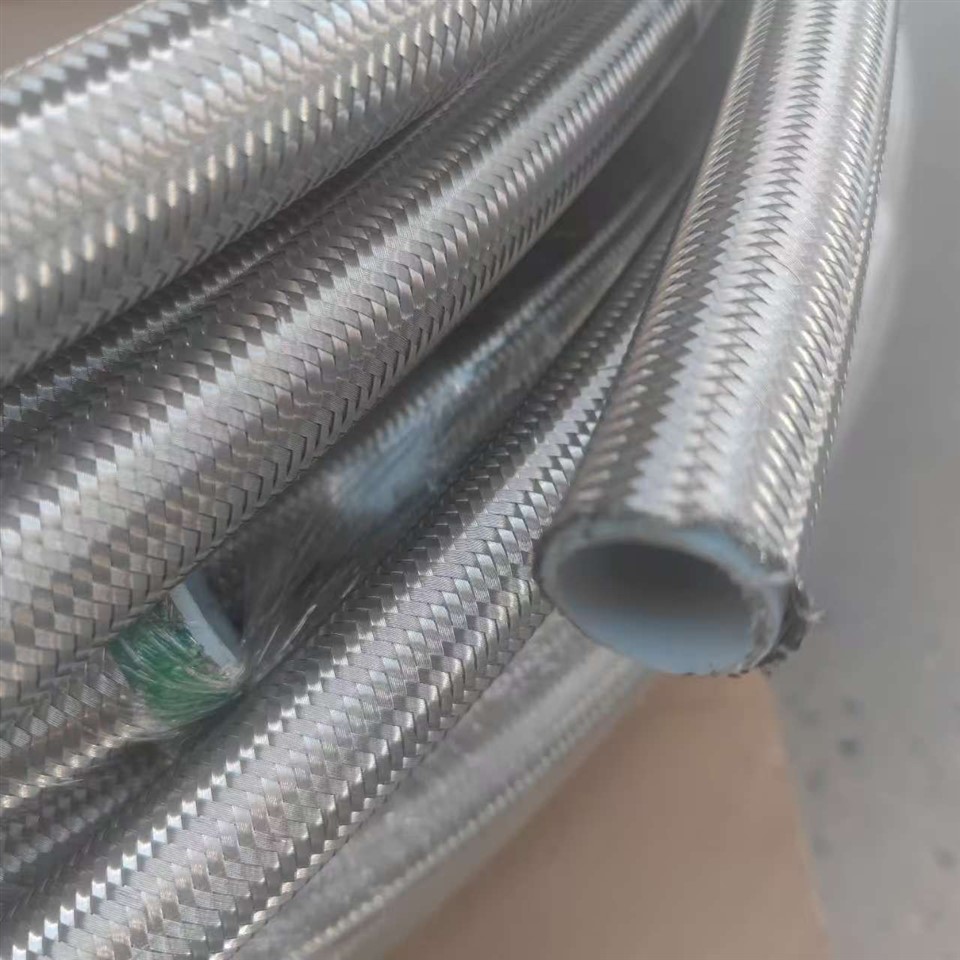
The pressure rating of the Teflon hose is a crucial factor. Different gases may require different pressure levels for transfer, and the hose must be able to withstand the maximum pressure of the gas system. It is important to select a Teflon hose with a pressure rating that exceeds the operating pressure of the gas transfer application. For high - pressure gas transfer, PTFE Braided Hose is often a better choice as the braiding provides additional strength and reinforcement.
Hose Size
The size of the Teflon hose, including the inner diameter and outer diameter, affects the flow rate of the gas. A larger inner diameter allows for a higher flow rate, but it may also increase the cost and space requirements. The hose size should be selected based on the required gas flow rate, pressure drop limitations, and the overall design of the gas transfer system.
Fittings and Connections
Proper fittings and connections are essential for a safe and efficient gas transfer system. The fittings must be compatible with the Teflon hose and the gas being transferred. They should also be installed correctly to prevent leaks. There are various types of fittings available for Teflon hoses, such as compression fittings, flanged fittings, and quick - connect fittings.
Environmental Conditions
The environmental conditions where the gas transfer takes place also need to be considered. Factors such as humidity, exposure to sunlight, and the presence of other chemicals in the environment can affect the performance and lifespan of the Teflon hose. For outdoor applications, additional protection may be required to prevent UV degradation of the hose.
Our Teflon Hose Products
At our company, we offer a wide range of PTFE Hose products suitable for gas transfer applications. Our hoses are manufactured to the highest quality standards, ensuring excellent chemical resistance, temperature resistance, and mechanical performance.
We have different types of Teflon hoses, including smooth - bore hoses and convoluted hoses. Smooth - bore hoses are ideal for applications where a low - friction, straight - through flow is required, while convoluted hoses offer greater flexibility, making them easier to install in tight spaces.
Our PTFE Hose products also come with a variety of options for braiding materials, such as stainless steel, polyester, and aramid. The choice of braiding material depends on the specific requirements of the gas transfer application, such as pressure rating, flexibility, and abrasion resistance.
Conclusion
In conclusion, Teflon hoses can be used for gas transfer in a wide range of applications due to their excellent chemical resistance, temperature resistance, low friction coefficient, and other beneficial properties. However, it is important to carefully consider factors such as gas compatibility, pressure rating, hose size, fittings, and environmental conditions to ensure a safe and efficient gas transfer system.
If you are in need of Teflon hoses for your gas transfer applications, we are here to help. Our team of experts can provide you with professional advice on hose selection, installation, and maintenance. Contact us today to discuss your specific requirements and start a procurement negotiation. We look forward to working with you to provide the best Teflon hose solutions for your gas transfer needs.
References
- "Handbook of Fluoropolymer Science and Technology" by John Scheirs and Tatsuaki Yamabe
- "Industrial Gas Handbook: Gas Separation and Purification" by Angelo Basile and Piero Barbieri
- "Chemical Resistance of Plastics and Elastomers: A Practical Guide" by Charles A. Harper