

Hey there! As a PTFE hose supplier, I get a ton of questions from folks about how to pick the right PTFE hose for their specific applications. It can be a bit of a head - scratcher, but don't worry! I'm here to break it down for you.
First off, let's talk about what PTFE is. PTFE stands for polytetrafluoroethylene, which is a synthetic fluoropolymer. It's well - known for its amazing chemical resistance, high temperature tolerance, and low friction properties. These features make PTFE hoses super useful in a whole bunch of industries, like chemical processing, food and beverage, and automotive.
Understanding Your Application
The very first step in choosing the right PTFE hose is to really understand what you'll be using it for. You gotta think about the following aspects:
Chemical Compatibility
The chemicals that will flow through the hose are a huge deal. PTFE is resistant to a wide range of chemicals, but not all of them. Some strong oxidizing agents or certain solvents might react with PTFE over time. So, you need to know exactly what chemicals will be in contact with the hose. For example, if you're dealing with concentrated sulfuric acid in a chemical plant, you need a PTFE hose that can handle that harsh environment. You can usually find chemical compatibility charts from hose manufacturers. Make sure to double - check these charts before making a decision.
Temperature Range
Another crucial factor is the temperature of the fluid or gas that will be flowing through the hose. PTFE hoses can generally handle a wide temperature range, but different types of PTFE hoses have different limits. If you're working in a high - temperature application, like a steam line in a power plant, you'll need a hose that can withstand those extreme temperatures without degrading. On the other hand, if you're dealing with cryogenic fluids, you need a hose that can remain flexible and functional at very low temperatures.
Pressure Requirements
The pressure of the fluid or gas in your system is also key. High - pressure applications, such as hydraulic systems, require hoses that can handle the stress without bursting or leaking. You need to know the maximum operating pressure of your system and choose a PTFE hose with a pressure rating that exceeds this value. This gives you a safety margin and ensures the hose will work reliably over time.
Types of PTFE Hoses
Now that you understand your application, let's take a look at the different types of PTFE hoses available.
PTFE Braided Hose
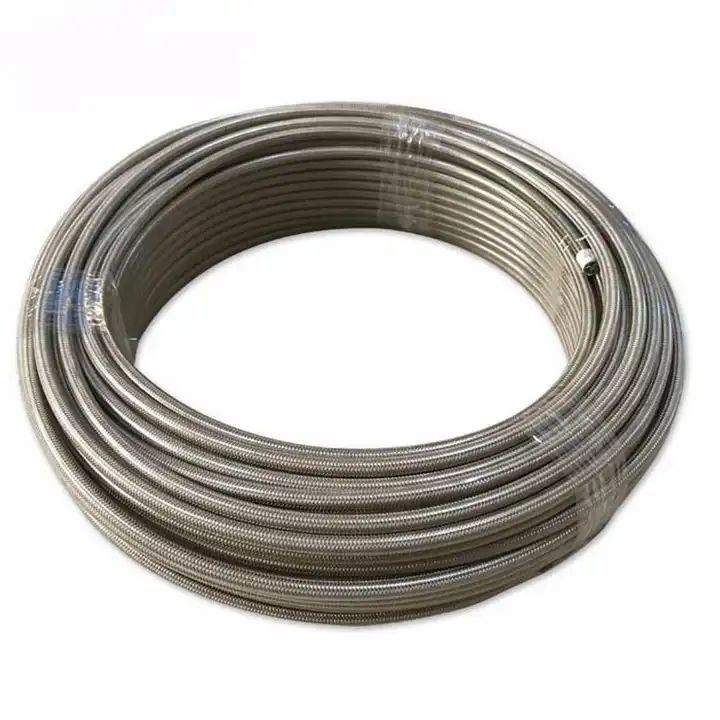
PTFE braided hoses are one of the most popular choices. They have a PTFE inner tube that's reinforced with a braided outer layer, usually made of stainless steel or other strong materials. The braided layer adds strength and stability to the hose, making it suitable for high - pressure applications. It also helps to prevent the hose from kinking or collapsing. These hoses are great for use in hydraulic systems, chemical transfer, and industrial applications where you need a durable and reliable hose.
PTFE Teflon Hose
PTFE Teflon hoses are known for their excellent chemical resistance. They are often used in applications where the fluid being transferred is highly corrosive. The smooth inner surface of the PTFE Teflon hose also reduces friction, which can improve the flow rate of the fluid. These hoses are commonly used in the chemical, pharmaceutical, and food industries.
PTFE Hose
PTFE hoses come in a variety of configurations to suit different applications. Some are designed for general - purpose use, while others are more specialized. For example, there are PTFE hoses with different wall thicknesses, which can affect their pressure rating and flexibility. You can also find PTFE hoses with different end fittings, such as flanges or quick - connect couplings, depending on your system requirements.
Hose Size and Length
Once you've decided on the type of PTFE hose, you need to think about the size and length. The size of the hose is usually determined by its inner diameter (ID). A larger ID allows for a higher flow rate, but it might not be suitable for all applications. You need to balance the flow rate requirements with the available space in your system.
The length of the hose is also important. If the hose is too short, it might not reach where it needs to go, and if it's too long, it can create unnecessary pressure drops and increase the risk of kinking. Measure the distance between the connection points carefully and add a little extra length for flexibility and ease of installation.
End Fittings
End fittings are the parts that connect the hose to your system. There are many different types of end fittings available, such as threaded fittings, flanges, and quick - connect couplings. The choice of end fitting depends on your system requirements and the type of connection you need.
Make sure the end fittings are compatible with the hose and the system. They should be made of materials that are resistant to the same chemicals and temperatures as the hose. Improperly matched end fittings can lead to leaks and other problems, so it's important to get this right.
Quality and Certification
When choosing a PTFE hose, you want to make sure you're getting a high - quality product. Look for hoses that are manufactured to industry standards and have the necessary certifications. For example, hoses used in the food and beverage industry should meet FDA regulations, and hoses used in the medical industry should meet strict biocompatibility standards.
A reputable PTFE hose supplier will be able to provide you with information about the quality and certifications of their products. Don't be afraid to ask questions and request documentation to ensure you're getting a reliable and safe hose.
Cost Considerations
Cost is always a factor when making a purchasing decision. While it's tempting to go for the cheapest option, remember that quality often comes at a price. A low - cost hose might not last as long or perform as well as a higher - quality one. Consider the total cost of ownership, which includes the initial purchase price, installation costs, maintenance costs, and the expected lifespan of the hose.

Sometimes, spending a little more upfront on a high - quality PTFE hose can save you money in the long run by reducing downtime, maintenance, and replacement costs.
Conclusion
Choosing the right PTFE hose for your application might seem like a complex task, but if you follow these steps, you'll be well on your way to making the right choice. Understand your application, consider the different types of hoses available, think about the size and length, choose the right end fittings, ensure quality and certification, and factor in the cost.
If you have any questions or need more help in selecting the right PTFE hose for your specific needs, don't hesitate to reach out. We're here to assist you in finding the perfect solution for your application. Whether you're a small business or a large industrial operation, we can provide you with high - quality PTFE hoses that meet your requirements.
So, if you're ready to start the process of purchasing a PTFE hose, let's get in touch and have a chat about your needs. We can discuss the best options for you and guide you through the selection process. Looking forward to working with you!
References
- "Handbook of PTFE Technology" - A comprehensive guide on PTFE materials and their applications.
- Industry standards and regulations related to PTFE hoses, such as ASTM and ISO standards.
- Manufacturer's technical documentation and product catalogs.