

SAE 100 R14 hoses are an essential component in various hydraulic systems, offering high performance and reliability. As a supplier of SAE 100 R14 hoses, I have witnessed the diverse needs of customers and the different types of these hoses available in the market. In this blog, I will discuss the various types of SAE 100 R14 hoses, their characteristics, and applications, aiming to provide a comprehensive understanding to those in the industry.
Understanding the Basics of SAE 100 R14 Hose
The SAE 100 R14 hose is a high - pressure hydraulic hose, designed to meet the standards set by the Society of Automotive Engineers (SAE). It is used primarily in heavy - duty hydraulic applications where high - pressure resistance and durability are crucial. The typical structure of an SAE 100 R14 hose consists of an inner tube, a reinforcement layer, and an outer cover. The inner tube is responsible for carrying the hydraulic fluid, while the reinforcement layer provides strength and pressure resistance. The outer cover protects the hose from abrasion, weathering, and other environmental factors.
Types of SAE 100 R14 Hose
SAE 100 R14 Teflonning Hose
One of the most popular types is the SAE 100 R14 Teflonning Hose. This hose features a Teflon - lined inner tube. Teflon, or polytetrafluoroethylene (PTFE), offers excellent chemical resistance. It can withstand a wide range of hydraulic fluids, including synthetic oils, water - glycol mixtures, and phosphate esters.
The Teflon lining also provides a low - friction surface, which reduces pressure drop within the hose. This is particularly important in high - flow applications where minimizing energy loss is essential. Moreover, the smooth surface of the Teflon lining prevents the build - up of contaminants, ensuring the cleanliness of the hydraulic system.
These hoses are commonly used in industries such as aerospace, chemical processing, and food and beverage, where chemical compatibility and system cleanliness are of utmost importance.
PTFE Braided Hose
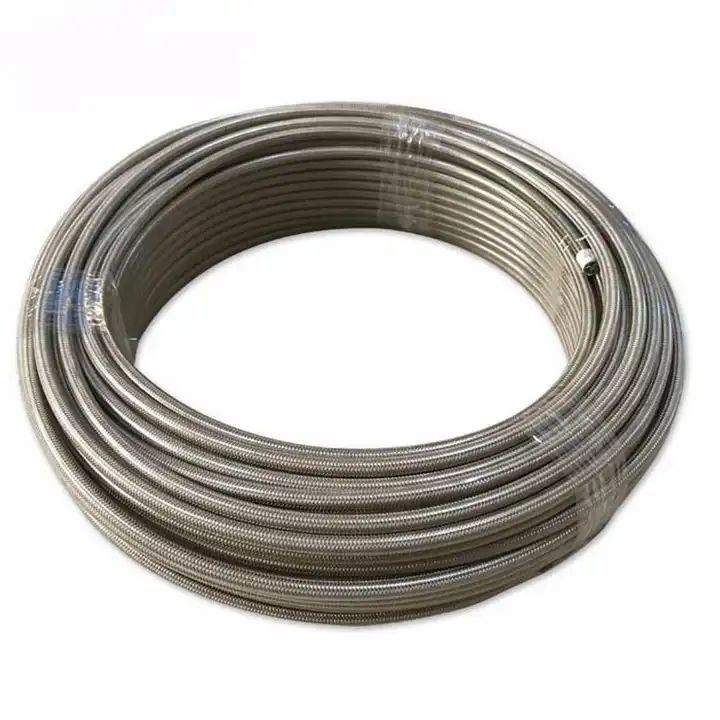
PTFE Braided Hose is another type of SAE 100 R14 hose. In this design, the PTFE inner tube is reinforced with a braided layer. The braided reinforcement can be made of materials such as stainless steel, synthetic fibers, or a combination of both.
Stainless - steel braiding provides high strength and excellent corrosion resistance. It can handle high - pressure applications and is suitable for use in harsh environments. Synthetic fiber braiding, on the other hand, is lighter in weight and offers good flexibility.
PTFE braided hoses are often used in mobile hydraulic equipment, such as construction machinery and agricultural vehicles. Their flexibility allows for easier installation in tight spaces, while the high - pressure resistance ensures reliable operation under heavy loads.
PTFE Teflon Hose
The PTFE Teflon Hose is yet another variant of the SAE 100 R14 hose. This hose typically has a thicker Teflon inner tube, which provides enhanced chemical resistance and temperature stability. It can operate in a wide temperature range, from extremely low to high temperatures, without compromising its performance.
The Teflon material also has excellent non - stick properties, making it easy to clean and maintain. In applications where the hydraulic fluid is prone to solidification or coking, the PTFE Teflon hose can prevent the build - up of deposits on the inner wall.
These hoses are widely used in the oil and gas industry, power generation plants, and automotive manufacturing. In oil and gas applications, they are used for transporting various types of fuels and lubricants, while in power generation plants, they are used in hydraulic control systems.
Characteristics and Applications
Each type of SAE 100 R14 hose has its own unique characteristics and applications:
High - Pressure Resistance
All SAE 100 R14 hoses are designed to withstand high pressures. The reinforcement layers in the hoses, whether braided or otherwise, are engineered to provide the necessary strength. For example, in heavy - duty industrial hydraulic systems, these hoses can handle pressures ranging from 3,000 to 6,000 psi, depending on the specific design and construction.
Temperature Resistance
Temperature resistance varies among different types. Teflon - lined hoses, such as the SAE 100 R14 Teflonning Hose and PTFE Teflon Hose, can operate in a wider temperature range compared to traditional rubber - lined hoses. They can withstand temperatures from - 40°F to 400°F (- 40°C to 204°C), making them suitable for both cold - climate and high - temperature applications.
Chemical Resistance
The chemical resistance of SAE 100 R14 hoses is also an important factor. As mentioned earlier, hoses with Teflon or PTFE linings offer superior chemical resistance. They can handle a variety of hydraulic fluids, acids, and corrosive chemicals, which is crucial in industries such as chemical processing and metalworking.
Considerations for Selecting the Right SAE 100 R14 Hose
When selecting an SAE 100 R14 hose for a specific application, several factors need to be considered:
Pressure Requirements
The operating pressure of the hydraulic system is the primary consideration. It is essential to choose a hose that can handle the maximum pressure without failure. Check the pressure rating of the hose, which is typically specified by the manufacturer.
Temperature Range
Determine the temperature range in which the hose will operate. If the application involves extreme temperatures, a hose with high - temperature resistance, such as a PTFE - lined hose, should be selected.
Chemical Compatibility
Identify the type of hydraulic fluid or chemicals that will be transported through the hose. Ensure that the inner tube material of the hose is compatible with these substances to prevent degradation and leaks.
Flexibility and Bend Radius
Consider the installation requirements. If the hose needs to be bent or routed through tight spaces, a more flexible hose, such as a PTFE braided hose, may be more suitable. Check the minimum bend radius specified by the manufacturer to ensure proper installation.
Conclusion
As a supplier of SAE 100 R14 hoses, I understand the importance of providing the right type of hose for each customer's specific needs. With the different types available, including the SAE 100 R14 Teflonning Hose, PTFE Braided Hose, and PTFE Teflon Hose, customers can choose the most suitable option based on factors such as pressure requirements, temperature range, chemical compatibility, and flexibility.

If you are in the market for high - quality SAE 100 R14 hoses, please feel free to contact us. We have a wide range of products to meet your diverse needs, and our team of experts can assist you in selecting the right hose for your application. We look forward to the opportunity to work with you and help you achieve optimal performance in your hydraulic systems.
References
- "Hydraulic Hoses: A Comprehensive Guide" by Hydraulic Institute
- SAE Standards Handbook: Hydraulic Hoses and Fittings