

As a seasoned PTFE hose supplier, I've witnessed firsthand the fluctuations in pricing and the various elements that drive these changes. PTFE (Polytetrafluoroethylene) hoses are renowned for their exceptional chemical resistance, high-temperature tolerance, and low friction coefficient, making them a staple in industries ranging from chemical processing to food and beverage. Understanding what factors affect the price of a PTFE hose is crucial for both suppliers and customers, as it helps in making informed decisions and ensuring cost - effectiveness.
Material Quality
The quality of the PTFE resin used in hose manufacturing is a primary determinant of price. High - grade PTFE resins offer superior chemical resistance, better mechanical properties, and longer service life. These resins are produced using advanced manufacturing processes that ensure a consistent molecular structure and fewer impurities. For instance, virgin PTFE resins, which have never been recycled, are more expensive than recycled or reprocessed ones. Virgin PTFE provides optimal performance in critical applications where purity and reliability are non - negotiable, such as in pharmaceutical and semiconductor manufacturing.
On the other hand, recycled PTFE can be a more cost - effective option for less demanding applications. However, it may have slightly reduced performance characteristics due to the degradation of the polymer during the recycling process. As a supplier, we source the best - quality PTFE resins that meet the specific requirements of our customers, which directly impacts the price of the final product.

Hose Construction
The construction of a PTFE hose also plays a significant role in its pricing. There are different types of PTFE hose constructions, including smoothbore and convoluted designs. Smoothbore PTFE hoses have a straight, untextured inner bore, which provides low - friction flow and is ideal for applications where a high flow rate and minimal pressure drop are required. The manufacturing process of smoothbore hoses is relatively straightforward, but it still requires precision to ensure a consistent inner diameter and wall thickness.
Convoluted PTFE hoses, on the other hand, have a corrugated inner bore, which gives them greater flexibility compared to smoothbore hoses. This flexibility makes them easier to install in tight spaces and reduces the risk of kinking. However, the manufacturing process for convoluted hoses is more complex, involving additional steps to create the corrugations. As a result, convoluted PTFE hoses are generally more expensive than smoothbore hoses.
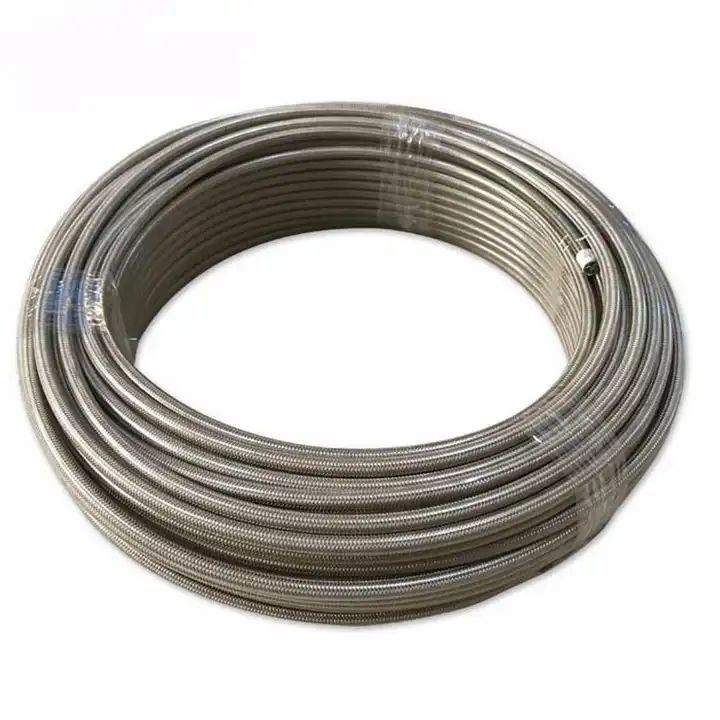
Another aspect of hose construction is the reinforcement layer. PTFE hoses are often reinforced with materials such as stainless steel braid, polyester braid, or aramid fibers to increase their pressure - bearing capacity and durability. The type and thickness of the reinforcement material affect the price. For example, stainless steel braid is a popular choice due to its high strength, corrosion resistance, and aesthetic appeal. But it is more expensive than polyester braid. You can find a wide range of PTFE Braided Hose options on our website, which showcases the different construction and reinforcement combinations available.
Size and Dimensions
The size and dimensions of a PTFE hose are key factors in determining its price. Larger - diameter hoses require more raw materials during the manufacturing process, which increases the cost. Additionally, the length of the hose also impacts the price. Longer hoses need more PTFE resin and reinforcement material, and they may also require more complex manufacturing processes to ensure uniformity and quality throughout the length.
The wall thickness of the PTFE hose is another important dimension. Thicker walls provide greater pressure resistance and durability, but they also require more material, resulting in a higher price. When customers order PTFE hoses, they need to carefully consider the size and dimensions based on their specific application requirements to balance performance and cost.
Industry Standards and Certifications
Meeting industry standards and obtaining relevant certifications can significantly affect the price of a PTFE hose. In industries such as food and beverage, pharmaceuticals, and aerospace, hoses must comply with strict regulations to ensure product safety and quality. For example, hoses used in the food industry may need to meet FDA (Food and Drug Administration) requirements, which ensure that the hose material is safe for contact with food products.
Obtaining these certifications involves rigorous testing and quality control procedures, which add to the manufacturing cost. However, it also provides customers with the assurance that the hose meets the highest standards of quality and safety. Our SAE 100 R14 Hose is designed to meet specific industry standards, and the cost reflects the investment in meeting these requirements.
Market Demand and Supply
The basic economic principle of supply and demand also influences the price of PTFE hoses. When the demand for PTFE hoses is high, such as during periods of rapid industrial growth or in industries experiencing a surge in production, the price tends to increase. This is because suppliers may face challenges in sourcing raw materials and increasing production capacity to meet the demand.
Conversely, when the supply of PTFE hoses exceeds the demand, prices may drop. Market factors such as the availability of raw materials, global economic conditions, and competition among suppliers all play a role in determining the supply - demand balance. As a supplier, we closely monitor market trends to adjust our pricing strategies accordingly.
Customization
Customization is a significant factor that can drive up the price of PTFE hoses. Many customers have unique requirements for their hoses, such as special end fittings, custom lengths, or specific colors. Manufacturing custom - made hoses requires additional engineering, tooling, and production processes, which increase the cost.
For example, if a customer needs a PTFE hose with a non - standard end fitting, we may need to design and manufacture a custom - made mold, which involves additional time and resources. However, customization allows us to provide solutions that precisely meet the customer's needs, and many customers are willing to pay a premium for this level of service. You can explore our range of PTFE Braided Hose and discuss your customization requirements with our team.
Conclusion
In conclusion, the price of a PTFE hose is influenced by a multitude of factors, including material quality, hose construction, size and dimensions, industry standards and certifications, market demand and supply, and customization. As a PTFE hose supplier, we strive to provide our customers with high - quality hoses at competitive prices. We understand that each customer has unique requirements, and we work closely with them to find the most cost - effective solutions.
If you are in the market for PTFE hoses and want to discuss your specific needs, we invite you to reach out to us. Our team of experts is ready to assist you in selecting the right hose for your application and providing you with a detailed quote. We look forward to the opportunity to serve you and build a long - term partnership.
References
- "Handbook of Fluoropolymer Science and Technology" by John Scheirs and Thomas M. Kemmer
- Industry reports on PTFE hose manufacturing and market trends